Question
Give an explanation for the catalytic properties shown by transition metals.

Answer

Transition metals show catalytic property because of their ability to adopt multiple oxidation states. Catalysts at a solid surface involve the formation of bond between reactant molecules and atoms of the surface of the catalyst. This has the effect of increasing the concentration of the reactants at the catalyst surface and also weakening of the bonds in the reacting molecules & the activation energy is lowered, moreover transition metals can change their oxidation state. Transition metals have tendency to form reaction intermediates with suitable reactants. The reaction intermediates decompose yielding products and regenerating the original substance. The transition metals form reaction intermediates due to the presence of vacant orbitals.

Need a full question paper?

Generate a complete, print-ready paper with questions like this in minutes — across 16+ boards, with answer keys.

Start Generating Free

Similar questions

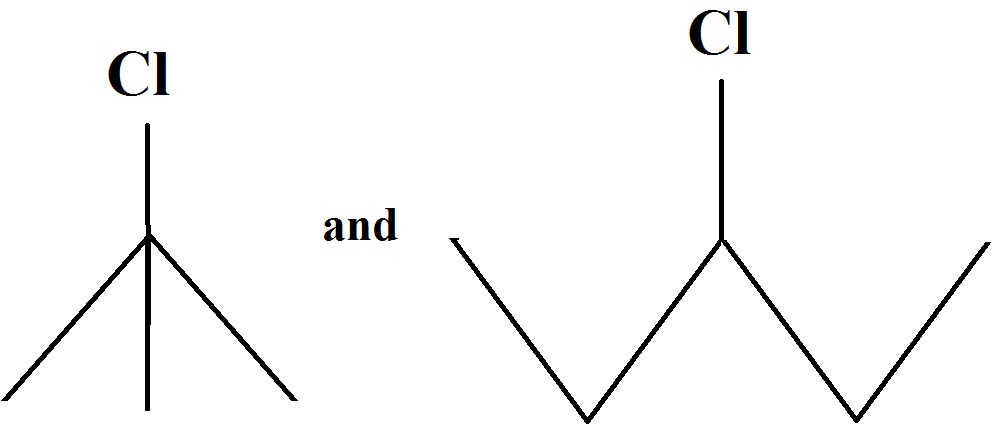
In the following pairs of halogen compounds, which compound undergoes faster $S_N1$ reaction?
  1.  
  1.  
Note: In the following questions a statement of assertion followed by a statement of reason is given. Choose the correct answer out of the following choices.
Assertion: $E_{Ag+/Ag}$ increases with increase in concentration of $Ag^+$ ions.
Reason: $E_{Ag+/Ag}$ has a positive value.
Accomplish the following conversion:
Aniline to 2, 4, 6 -tribromofluorobenzene.
Name two fat soluble vitamins, their sources and the diseases caused due to their deficiency in diet.
Note: In the following questions a statement of assertion followed by a statement of reason is given. Choose the correct answer out of the following choices.
Assertion: Current stops flowing when $E_{Cell} = 0.$
Reason: Equilibrium of the cell reaction is attained.
Define electrode and electrode potential.
Note: In the following questions a statement of assertion followed by a statement of reason is given. Choose the correct answer out of the following choices.
  1. Both assertion and reason are true and the reason is the correct explanation of assertion.
  2. Both assertion and reason are true and the reason is not the correct explanation of assertion.
  3. Assertion is true but the reason is false.
  4. Both assertion and reason are false.
  5. Assertion is false but reason is true.
Assertion: Cu is less reactive than hydrogen.
Reason: $\text{E}^{\ominus}_{\text{Cu}^{2+}/\text{Cu}}$ is negative.
Using the standard electrode potentials given in Table $3.1,$ predict if the reaction between the following is feasible:$ Fe^{3+} (aq)$ and $Br^– (aq)$
HI is stronger acid than HF. Explain.
Complete the following reactions by identifying A, B and C.
$\ \ \ \ \ \ \ \ \ \ \ \ \ \text{CH}_3\\ \ \ \ \ \ \ \ \ \ \ \ \ \ |\\\text{CH}_3-\text{C}-\text{C}-\text{CH}_3\ +\ \text{NaOI}\ \rightarrow\ \text{B}\ +\ \text{C}\\ \ \ \ \ \ \ \ \ \ \ \ \ \ | \ \ \ \ \ \ || \ \\ \ \ \ \ \ \ \ \ \ \ \ \ \text{CH}_3\text{O}$