Question
Give an interesting observation of melanic Moth supporting development by natural selection in England.
Answer

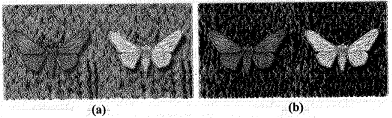
→ An interesting observation of melanic Moth supporting the development by natural selection comes from England.
→ In a collection of Moths made in 1850, i.e. before industrialisation. Set in, it was observed that.
→ But after industrialization i.e. in 1920 more dark winged moths were seen in the same area i.e. the proportion was reversed.
→ From this observation, it is suggested that, "Predators find spots in a contrasting background".
→ In the contrasting background under the effect of this condition white-winged moths did not survive due to predators, but dark-winged OR melanised moth plants survived.
→ Before industrialization, the lichen was almost white in color.
→ White-winged plants survived in a background containing white lichens, but dark-winged moths were eaten by predators.
Image
→ Thus the particles that could be colored could make their existence.
→ This explanation is supported by the fact that where there is no industrialization, the number of melanic moth is low.
→ This shows that in mixed populations they adapt better, survive and increase population life.
→ Absence of lichen suggests industrial pollution (which is indicative).

Need a full question paper?

Generate a complete, print-ready paper with questions like this in minutes — across 16+ boards, with answer keys.

Start Generating Free

Similar questions

Snapdragon shows incomplete dominance for flower colour. Work out across and explain the phenomenon. How is this inheritance different from Mendelian pattern of inheritance? Explain.

OR

In snapdragon (Antirrhinum majus), a plant with red flowers was crossed with a plant with white flowers. Work out all the possible genotypes and phenotypes of F1 and F2 generations. Comment on the pattern of inheritance in this case.

Autotrophs convert inorganic materials into organic material with the help of solar energy.

  1. Name the process depicted by the given statement.
  2. Name the pigment which traps solar energy and convert light energy to chemical energy.
  3. What do you understand by a photosynthetic unit?

$6\text{CO}_2+12\text{H}_2\text{O}\xrightarrow{\text{Light}}\text{C}_6\text{H}_{12}\text{O}+6\text{H}_2\text{O}+6\text{O}_2$
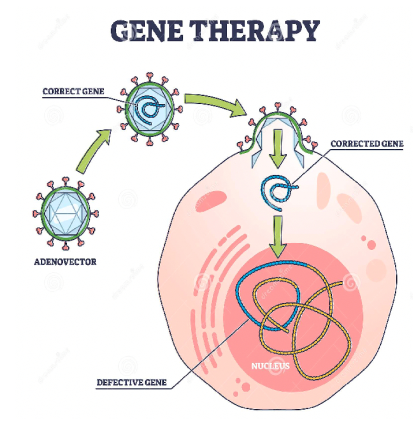
The image below describes the process of Gene Therapy.
Image
i. What is gene therapy?
ii. Name the first clinical case in which it was used.
During a school trip to ‘Rohtang Pass’, one of your classmate suddenly developed ‘altitude sickness’. But, she recovered after some time.
  1. Mention one symptom to diagnose the sickness.
  2. What caused the sickness?
  3. How could she recover by herself after some time?
  1. In plant breeding experiments, pistillate flowers are not emasculated, but are still bagged. Explain.
  2. Why are outbreeding devices developed by some flowering plants?
Name and explain the type of interaction that exists in mycorrhizae and between cattle egret and grazing cattle.
Explain the increase in the numbers of melanic (dark winged) moths in the urban areas of post-industrialisation period in England.
Community service department of your school plans a visit to a slum area near the school with an objective to educate the slum dwellers with respect to health and hygiene.
  1. Why is there a need to organise such visits?
  2. Write the steps you will highlight as a member of this department, in your interactions with them to enable them to lead a healthy life.
What way the advent of the birth-control pill have resulted in an increase in STDs?
How are assisted reproductive technologies helpful to humans? How are ZIFT and GIFT different from intra uterine transfers? Explain.