Question
Give differences between cartilaginous and bony fishes.

Answer

Differences between cartilaginous and bony fishes:
S.No.
Cartilaginous Fishes (Chondrichthyes)
Bony Fishes (Osteichthyes)
1.
They are always marine.
They may be marine or freshwater.
2.
Skin is covered by small placoid scales.
Skin is covered with large cycloid scales.
3.
Endoskeleton is cartilaginous.
Endoskeleton is partly or completely bony.
4.
Gill slits are not covered by gill covers.
Gill slits are covered by gill covers.
5.
Swim bladder is absent.
Swim bladder is present.
6.
Tail fin is asymmetrical .
Tail fin is symmetrical.
7.
Excretory matter is urea.
Excretory matter is ammonia.
8.
They exhibit sexual dimorphism.
Sexual dimorphism is usually present.
9.
Mostly viviparous
Usually oviparous.
10.
e.g., sharks, skates.
e.g., Labeo, Catle, Hilsa.

Need a full question paper?

Generate a complete, print-ready paper with questions like this in minutes — across 16+ boards, with answer keys.
Start Generating Free

Similar questions

Comment upon the habitats and external features of animals belonging to class, amphibia and reptilia.
What are the characteristics of prokaryotic cells?
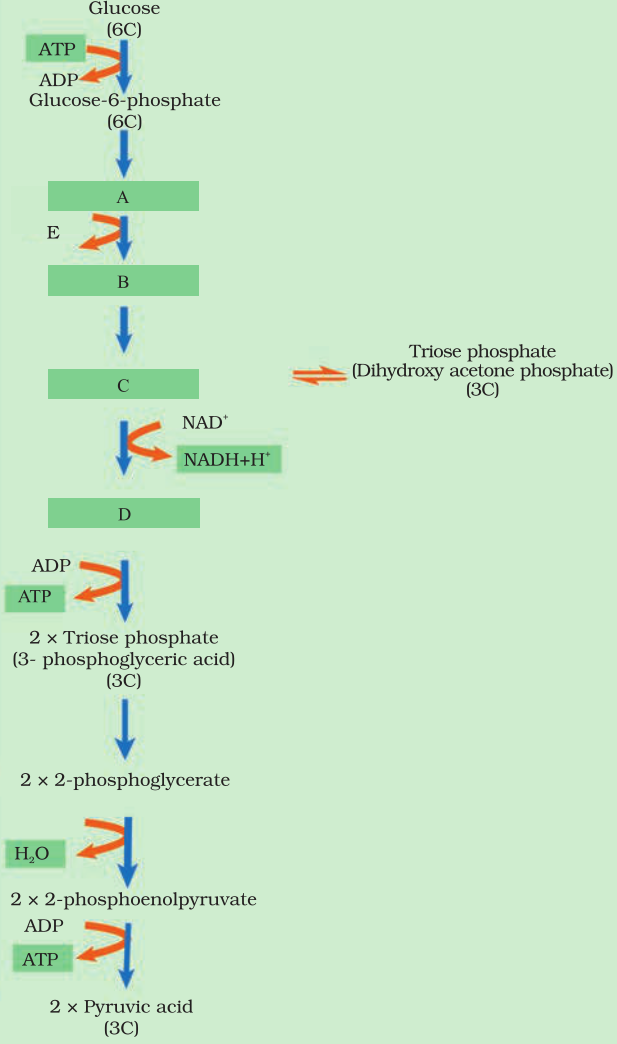
The figure given below shows the steps in glycolysis. Fill in the missing steps A, B, C, D and also indicate whether ATP is being used up or released at step E?
What is mitosis? Explain cytoplasmic division.
During the biology class, teacher taught that water should be conserved in the body of animals because it is precious and non-renewable in some cases. He asked the student that how the nature conserves water even through the excretory system are present in different organisms.
  1. Name three major excretory products of animals.
  2. Does loop of Henle play any role in water conservation in humans?
  3. Explain excretory organs in different animal groups.
  4. What values does the teacher possess?
We find that Rhizobium forms nodules on the roots of leguminous plants. Also Frankia another microbe forms nitrogen fixing nodules on the roots of non-leguminous plant Alnus.
  1. Can we artificially induce the property of nitrogen fixation in a plant – leguminous or non-leguminous?
  2. What kind of relationship is observed between mycorrhiza and pine trees?
  3. Is it necessary for a microbe to be in close association with a plant to provide mineral nutrition? Explain with the help of one example.
Prepare a list of some animals that are found parasitic on human beings.
Differentiate between haplontic and diplontic life cycles.
Briefly describe the causes, symptoms and prevention of common respiratory disorders through a table.
What are the conditions necessary for fixation of atmospheric nitrogen by Rhizobium. What is their role in $\mathrm{N}_2$ - fixation?