Question
Give examples of first order reaction.

Answer

→ Hydrogenation of ethene is an example of first order reaction.
$\begin{array}{l} C _2 H _4(g)+ H _2(g) \rightarrow C _2 H _6(g) \\ \text { Rate }= k \left[ C _2 H _4\right]\end{array}$
All natural and artificial radioactive decay of unstable nuclei take place by first order kinetics. $
\begin{array}{l}
{ }_{88}^{226} Ra \rightarrow{ }_2^4 He \ +\ { }_{86}^{222} Rn \\
\text { Rate }= k [ Ra ]
\end{array}
$
Decomposition of $N _2 O _5$ and $N _2 O$ are some more examples of first order reactions.

Need a full question paper?

Generate a complete, print-ready paper with questions like this in minutes — across 16+ boards, with answer keys.
Start Generating Free

Similar questions

The experimental rate equation of a reaction $2 N _2 O \rightarrow 2 N _{ 2 }+ O _2$ is as follows: rate $= k \left[ N _2 O \right]$. Write the mechamism of the reaction.
  1. Why are aquatic species more comfortable in cold water than in warm water?
  2. What happens when we place the blood cell in saline water solution (hypertonic solution)? Give reason.
Define conductivity and molar conductivity for the solution of an electrolyte.
The Ka and Kb values of a-amino acids are very low. Why?
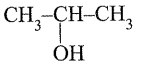
Write common name and IUPAC name of following alcohol compound.
Image
1.25 g of protein is present in 300 mL aqueous solution of a protein. The osmotic pressure of this solution at 300 K was found to be $2.50 \times 10^{-3}$ bar. Calculate the molar mass of protein. $[R=0.083 L$ bar $\operatorname{mol}^{-1} K^{-1}$ ].
Why is the C-O-H bond angle in alcohols slightly less than the tetrahedral angle whereas the C-O-C bond angle in ether is slightly greater?
What is the effect of temperature on the rate constant of a reaction? How can this temperature effect on rate constant be represented quantitatively?
Benzaldehyde can be obtained from benzal chloride. Write reactions for obtaining benzalchloride and then benzaldehyde from it.
For a reaction
$2\text{H}_2\text{O}_2\frac{\text{I}^-}{\text{alkaline medium}}2\text{H}_2\text{O}+\text{O}_2$
the proposed mechanism is as given below:
  1. $\text{H}_2\text{O}_2+\text{I}^{-}\xrightarrow{\ \ \ \ \ \ \ }\text{H}_2\text{O}+\text{IO}^{-}(\text{slow})$
  2. $\text{H}_2\text{O}_2+\text{IO}^{-}\xrightarrow{\ \ \ \ \ \ \ }\text{H}_2\text{O}+\text{I}^{-}+\text{O}_2(\text{fast})$
  1. Write rate law for the reaction.
  2. Write the overall order of reaction.
  3. Out of steps (1) and (2), which one is rate determining step?