Question
Give four examples of heterogeneous catalysis.

Answer

  1. Oxidation of sulphur dioxide to form sulphur trioxide. In this reaction, Pt acts as a catalyst
$2\text{SO}_{2(\text{g})}\xrightarrow{\ \ \ \ \ \ \ \ \ \ \text{Pt}_{(\text{s})}\ \ \ \ \ \ \ \ }2\text{SO}_{3(\text{g})}$
  1. Formation of ammonia by the combination of dinitrogen and dihydrogen in the presence of finely divided iron.
$\text{N}_{2(\text{g})}+3\text{H}_{2(\text{g})}\xrightarrow{\ \ \ \ \ \ \ \ \ \ \text{Fe}_{(\text{s})}\ \ \ \ \ \ \ \ }2\text{NH}_{3(\text{g})}$

This process is called the Haber's process.
  1. Oswald's process: Oxidation of ammonia to nitric oxide in the presence of platinum.
$4\text{NH}_{3(\text{g})}+5\text{O}_{2(\text{g})}\xrightarrow{\ \ \ \ \ \ \ \ \ \ \text{Pt}_{(\text{s})}\ \ \ \ \ \ \ \ }4\text{NO}_{(\text{g})}+6\text{H}_2\text{O}_{(\text{g})}$
  1. Hydrogenation of vegetable oils in the presence of Ni.
$\text{Vegetable }\text{oil}_{(1)}+\text{H}_{2(\text{g})}\xrightarrow{\ \ \ \ \ \ \ \ \ \ \text{Ni}_{(\text{s})}\ \ \ \ \ \ \ \ }\text{Vegetable }\text{ghee}_{(\text{s})}$

Need a full question paper?

Generate a complete, print-ready paper with questions like this in minutes — across 16+ boards, with answer keys.
Start Generating Free

Similar questions

Discuss the method to determine electrode potential of copper and zine by using standard hydrogen electrode.
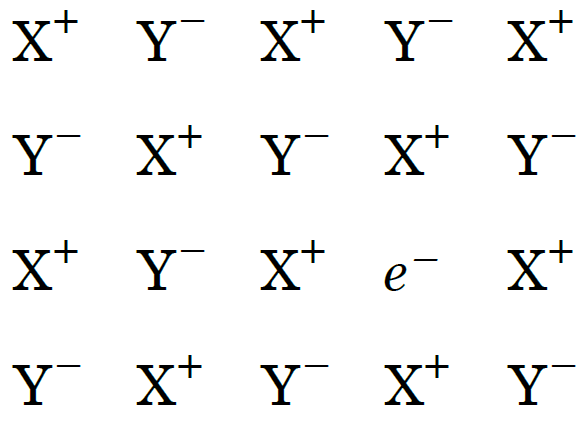
Examine the given defective crystal:
Answer the following questions:
  1. Is the above defect stoichiometric or non-stoichiometric?
  2. write the term used for the electron occupied site.
  3. Give an example of the compound which shows this type of defect.
  1. What type of semiconductor is obtained when silicon is doped with boron?
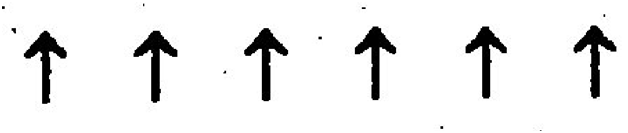
  2. What type of magnetism is shown in the following alignment of magnetic moments?
  1. What type of point defect is produced when $AgCl$ is doped with $CdCl_2?$
Give reasons:
a. $E ^{\circ}$ value for $Mn ^{3+} / Mn ^{2+}$ couple is much more positive than that for $Fe ^{3+} / Fe ^{2+}$.
b. Iron has higher enthalpy of atomization than that of copper.
c. $Sc ^{3+}$ is colourless in aqueous solution whereas $Ti ^{3+}$ is coloured.
What is the difference between physisorption and chemisorption?
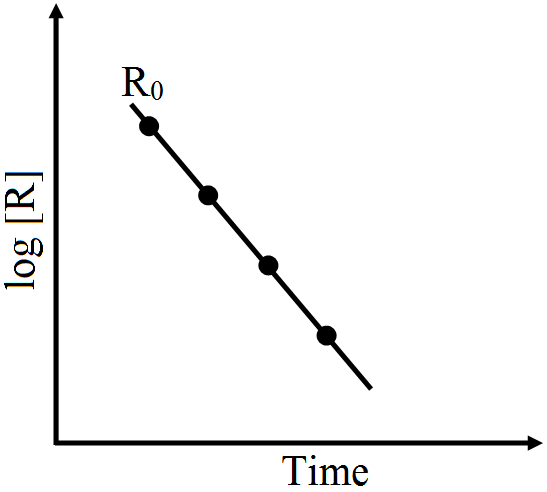
Observe the graph in diagram and answer the following questions.
  1. If slope is equal to $-2.0 \times 10^{-6} \sec^{-1}$, what will be the value of rate constant?
  2. How does the half-life of zero order reaction relate to its rate constant?
  1. What is the radius of sodium atom if it crystallises in bcc structure with the cell edge of $400$ pm?
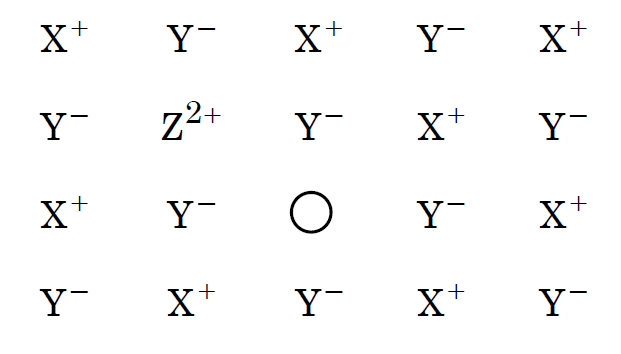
  2. Examine the given defective crystal:
  1. Write the term used for this type of defect.
  2. What is the result when $XY$ crystal is doped with divalent $(Z^{2+})$ impurity$?$
Discuss chemical properties of lanthanoids.
The cell in which the following reaction occurs:
$2\text{Fe}^{3+}(\text{aq})+2\text{I}^-(\text{aq})\rightarrow2\text{Fe}^{2+}(\text{aq})+\text{I}_2(\text{s})\ \text{has}\ \text{E}^\circ_{\text{cell}}$ = 0.236 V at 298 K. Calculate the standard Gibbs energy and the equilibrium constant of the cell reaction.
  1. Deficiency of which vitamin causes scurvy?
  2. What type of linkage is responsible for the formation of proteins?
  3. Write the product formed when glucose is treated with HI.