Question
Give scientific: Australopithecus is described as a man with ape brain.

Answer

(1) Australopithecus can be considered as a connecting link between ape and man due to the following ape-like and man like characteristics shown by it.
(2) The ape-like characteristics of Australopithecus:

  • The jaws and teeth were larger than those of modern man.
  • The face was prognathous, i.e. it had a muzzle like slope
  • The chin was absent
  • The eye-brow ridges projected over the eyes
  • Their cranial capacity ranged from 450-600 c.c.

(3) The man-like characteristics of Australopithecus:

  • It walked nearly or completely straight due to erect posture.
  • The vertebral column had a distinct lumbar curve with broad basin-like pelvic girdle.
  • Dentition was man-like with the smoothly rounded parabolic dental arch.
  • A simian gap was absent. Australopithecus is therefore, rightly described as a man with ape brain

Need a full question paper?

Generate a complete, print-ready paper with questions like this in minutes — across 16+ boards, with answer keys.

Start Generating Free

Similar questions

Study the table given below and answer the questions that follow:
Species A
Species B
Name of interaction
(+)
(+)
(A)
(-)
(-)
(b)
(+)
(-)
(c)
(+)
(0)
(d)
+ = Beneficial interaction
- = Detrimental interaction
0 = Neutral interaction
Identify a, b, c and d in the given table and explain any three of them with the help of an example each.
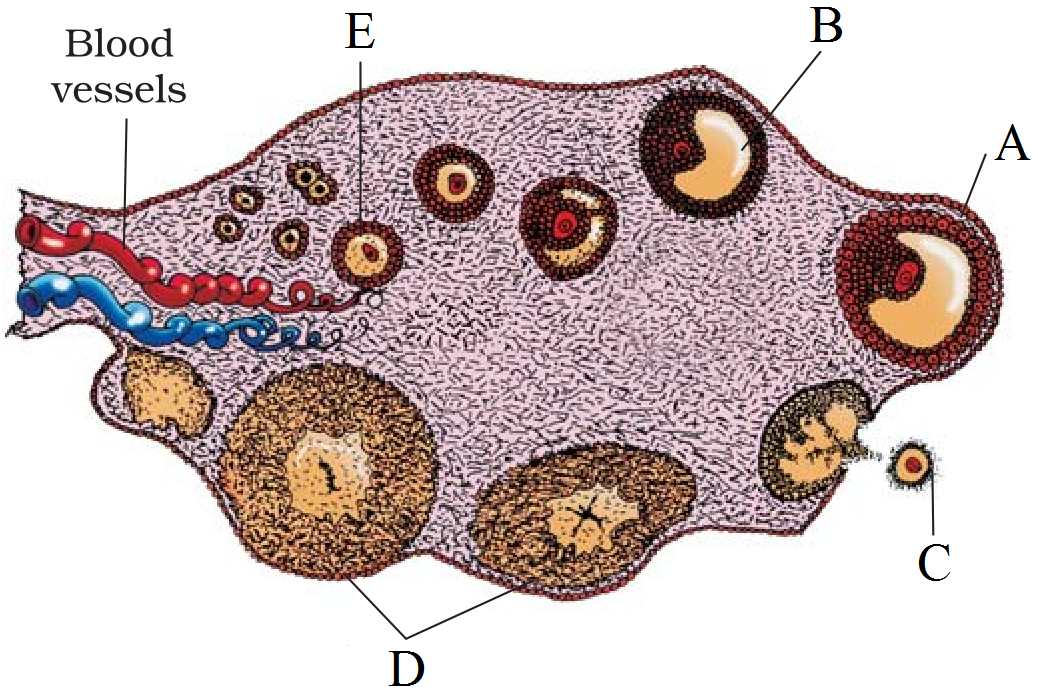
  1. Given below is the TS of human ovary. Identify the following in the diagram:
  • Corpus luteum.
  • Secondary oocyte.
  • Antrum.
  • Primary follicle.
  • Primary oocyte.
  1. Explain the changes the primary oocyte undergoes while in different follicular stages before ovulation.
​​​​​​​
During extraction of a tooth, the dentist gives an injection of Anaesthesia to the patient before extraction. Is the action potential generated? How does the local anaesthesia work? What is the effect of pain killer on the nervous system?
Who revealed biochemical nature of the transforming principle? How was it done?
List the three different allelic forms of gene “I” in humans. Explain the different phenotypic expressions, controlled by these three forms.
Resting potential of a nerve fibre.
Complete the following tables :

Type of Pollination

Agent

Kind of flowers

Example

1. Anemophily

______

Small, colourless, without nectar

Maize

2.__________

Bats

__________________________

Adansonia

3. Entomophily

______

Large, showy, sweet smell with nectar

_______

4.__________

Birds

Brightly coloured, large, showy, with dilute nectar

_______

Explain the steps involved in the elongation of polypeptide chain during its synthesis.
Give reasons why:
Groundnut seeds are exalbuminous and castor seeds are albuminous.
Sympathetic nervous system.