Question
Give short note on alternative methods for sewage.

Answer

Every community should have a way of disposing sewage so that people, animals and flies cannot touch it. This is called a sewage system. We know that poor sanitation is the basic cause of a number of diseases. To make our sanitation get better there are different types of sewage systems which can be used such as on-site systems and sewage or effluent systems. Septic tanks, composting pits, chemical toilets, etc., are examples of on-site sewage disposal systems.

Need a full question paper?

Generate a complete, print-ready paper with questions like this in minutes — across 16+ boards, with answer keys.
Start Generating Free

Similar questions

Assume, a person is standing in front of a plane mirror. The distance between the mirror and his image is $6m$. If the person moves 2m towards the plane mirror, what would be the distance between the person and his image?
Draw a labelled diagram of the human excretory system.
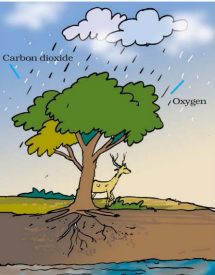
In figure, the artist has forgotten to put the labels and directions on the arrows. Mark the directions on the arrows and label the diagram using the following labels

Image

clouds, rain, atmosphere, carbon dioxide, oxygen, plants, animals, soil, roots, water table
How can rusting be prevented? Give any three methods.
State the differences between acids and bases.
Explain through an activity that soil has moisture in it.
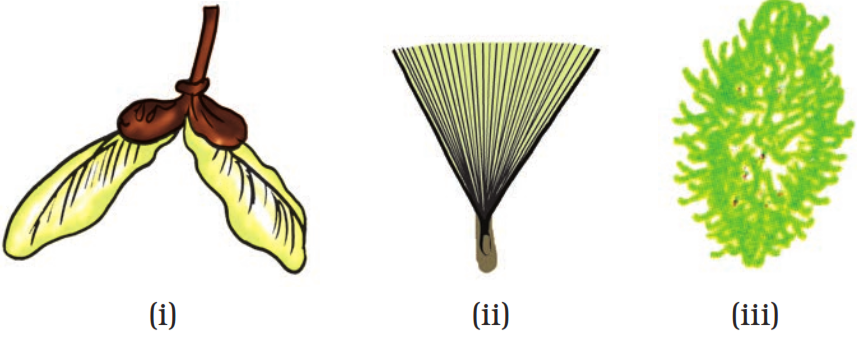
Group the seeds given in Figure $(i)$ to $(iii)$ according to their means of dispersion.
  1. Seed dispersed by wind.
  2. Seed dispersed by water.
  3. Seed dispersed by animal.
Explain wind storms and cyclones along with their effects?
If you leave a piece of iron in the open for a few days, it acquires a film of brownish substance, called rust.
(i) Do you think rust is different from iron?
(ii) Can you change rust back into iron by some simple method?
(iii) Do you think formation of rust on iron is a chemical change?
(iv) Give two other examples of a similar type of change.
Match the items of Column I with the items given in Column II.
Column I
 
 
Colunm II
a.
Yak wool
i
Sheared hair.
b.
Angora goats
ii
Silkworm.
c.
Mulberry leaves
iii
Tibet and ladakh.
d.
Scouring
iv
Jammu and kashmir.