MCQ
Given below are two statements : one is labelled as Assertion $(A)$ and the other is labelled as Reason $(R)$.

Assertion $(A)$:All vertebrates are chordates but all chordates are not vertebrates.

Reason $(R)$:Notochord is replaced by vertebral column in the adult vertebrates.

In the light of the above statements, choose the most appropriate answer from the options given below:

  • A
    Both $(A)$ and $(R)$ are correct and $(R)$ is the correct explanation of $(A)$
  • B
    $(A)$ is correct but $(R)$ is not correct
  • C
    $(A)$ is not correct but $(R)$ is correct
  • Both $(A)$ and $(R)$ are correct but $(R)$ is not the correct explanation of $(A)$
Answer

Correct option: D.
Both $(A)$ and $(R)$ are correct but $(R)$ is not the correct explanation of $(A)$
d

Need a full question paper?

Generate a complete, print-ready paper with questions like this in minutes — across 16+ boards, with answer keys.

Start Generating Free

Similar questions

$STDs$ are also called
There are some special types of cells found in the seminiferous tubules known as sertoli cells. These are
Population explosion is
Which one occurs in mollouscs but not in echinoderms
Terrestrial adaptations necessitated the production of :
Two pea plants were subjected for cross pollination. Of the $183$ plants produced in the next generation, $94$ plants were found to be tall and $89$ plants were found to be dwarf. The genotypes of the two parental plants are likely to be
In which of the following the placenta forms an important structure in development
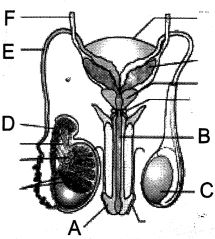
Identify $A, B, C, D, E$ and $F$ in Figure.
What would happen if in a gene encoding a polypeptide of 50 amino acids, 25th codon (UAU) is mutated to UAA?
Mammals have the ability to produce a concentrated urine. Which statement not match with production of concentrated urine ?
(i) The Henle's loop and vasa recta play a significant role in this.
(ii) Concentration of urine occurs by counter current mechanism.
(iii) The proximity between the Henle's loop and vasa recta, as well as the counter current in them increases osmolarity from cortex to medulla.
(iv) Osmolarity increasing from 300 mOsmol L' in the cortex to about 1200 mOsmol L' in the inner medulla.
(v) Osmolarity gradient from cortex to medulla is mainly caused by NaCl and urea.
(vi) Presence of osmolarity gradient helps in an easy passage of water from the collecting tubule thereby concentrating the filtrate (urine).
(vii) Human kidneys can produce urine nearly four times concentrated than the initial filtrate formed.