MCQ
Given below are two statements :

Statement $I:$
In Lucas test, primary, secondary and tertiary alcohols are distinguished on the basis of their reactivity with conc. $HCl + ZnCl _{2}$, known as Lucas Reagent.

Statement $II :$
Primary alcohols are most reactive and immediately produce turbidity at room temperature on reaction with Lucas Reagent.

In the light of the above statements, choose the most appropriate answer from the options given below :

  • A
    Both Statement $I$ and Statement $II$ are incorrect.
  • Statement $I$ is correct but Statement $II$ is incorrect.
  • C
    Statement $I$ is incorrect but Statement $II$ is correct.
  • D
    Both Statement $I$ and Statement $II$ are correct.

Answer

Correct option: B.
Statement $I$ is correct but Statement $II$ is incorrect.
b
$1^{\circ}, 2^{\circ}, 3^{\circ} Alcohol$ are distinguished by Lucas test on the basis of the time taken for turbidity to appear

$[Image]$

Reactivity of alcohol towards Lucas reagent $\Rightarrow 3^{\circ}>2^{\circ}>1^{\circ} \text { Alcohol }$

Need a full question paper?

Generate a complete, print-ready paper with questions like this in minutes — across 16+ boards, with answer keys.

Start Generating Free

Similar questions

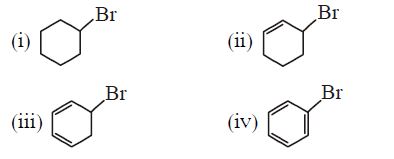
Arrange the following in order of ease of dehydrohalogenation
Which of the following is a basic amino acid :
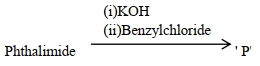
Phthalimide is made to undergo following sequence of reactions.

(Image)

Total number of $\pi$ bonds present in product ' $P$ ' is/are

Lanthanoid contraction is caused due to
The general formula ${(RCO)_2}O$ represents
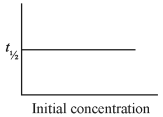
Which order of reaction does this graph show?

Image
$1.46 \,\mathrm{~g}$ of a biopolymer dissolved in a $100\, \mathrm{~mL}$ water at $300\, \mathrm{~K}$ exerted an osmotic pressure of $2.42 \times 10^{-3}$ $bar.$

The molar mass of the biopolymer is $.....\,\times 10^{4} \,\mathrm{~g}\,\mathrm{~mol}^{-1}$. (Round off to the Nearest Integer)

[Use : $\mathrm{R}=0.083\, \mathrm{~L}\, bar \,\mathrm{mol}^{-1} \,\mathrm{~K}^{-1}$ ]

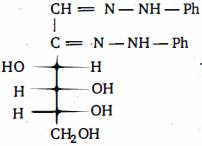
The given osazone can be obtained by
Given below are two statements:

Statement $I$: The boiling point of hydrides of Group $16$ elements follow the order

$\mathrm{H}_2 \mathrm{O}>\mathrm{H}_2 \mathrm{Te}>\mathrm{H}_2 \mathrm{Se}>\mathrm{H}_2 \mathrm{~S}$.

Statement $II$: On the basis of molecular mass, $\mathrm{H}_2 \mathrm{O}$ is expected to have lower boiling point than the othe members of the group but due to the presence of extensive $\mathrm{H}$-bonding in $\mathrm{H}_2 \mathrm{O}$, it has higher boiling point.

In the light of the above statements, choose the correct answer from the options given below:

Henry's law constants for $O_2$ and $N_2$ are ${K_O}_{_2} = 3.3 \times {10^7}{\mkern 1mu} atm,{\mkern 1mu} {\mkern 1mu} {K_{{N_2}}} = 6.51 \times {10^7}{\mkern 1mu} atm$ Calculate the ratio of $\frac{{{X_{{O_2}}}}}{{{X_{{N_2}}}}}$ i.e. the ratio of mole fractions of $O_2$ and $N_2$ dissolved in water at $25\,^oC$ from air