Question
Given below is a schematic representation of a lac operon. Answer the following questions:
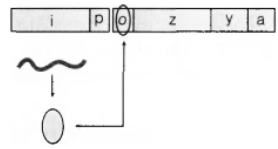
i. Identify i and p.
ii. Name the inducer for this operon.
iii. Explain the function of inducer for this operon.
Answer

i. i-Regulatory gene, p-Promoter gene.
ii. The Inducer is lactose.
iii. Functions of Lactose
a. Enters the cell and binds to the repressor and inactivates it.
b. As a result, repressor cannot bind to the operator. This allows RNA polymerase to have access to the promoter and transcription proceeds.

Need a full question paper?

Generate a complete, print-ready paper with questions like this in minutes — across 16+ boards, with answer keys.

Start Generating Free

Similar questions

Distinguish between :
Grazing food chain and detritus food chain
Shubham was taught in the biotechnology class about the production of recombinant protein with the help of bioreactor. He was surprised by this new information. In the evening he discussed it with his elder brother, who is a biotechnologist. He smiled and explained him in detail.
  1. What is recombinant protein?
  2. Why is bioreactors useful in industries?
  3. What are the values shown by Shubham?
Defferentiate between: (c) integument and testa
How is diapause different from hibernation?
  1. List the two methodologies which were involved in human genome project. Mention how they were used.
  2. Expand ‘YAC’ and mention what was it used for.
List any four symptoms shown by Klinefelter’s syndrome sufferer. Explain the cause of this disease.
Study the following diagram, and answer these questions:

  1. Why does a wide arrow point from both producers and consumers to decomposers?
  2. Why does a wide arrow point only from inorganic nutrient pool to producers?
  3. Why don't the wavy arrows point from decomposers to producers?
Explain the unit of transcription and gene.
How are bacteria made capable to take up recombinant DNA? Name the bacteria used for this process.
A cross is made between different homozygous pea plants for contrasting flower positions.
  1. Find out the position of flowers in F1 generation on the basis of genotypes.
  2. Work out the cross upto F2 generation.
  3. Compute the relative fraction of various genotypes in the F2 generation?