Question
Glucose is an aldohexose monosaccharide. Why does it react with hydrogen cyanide to form cyanohydrin but does not react with sodium hydrogen sulphite?

Answer

D-glucose exist in cyclic forms $\alpha$- and $\beta$- in which the aldehyde group is involved in the formation of a ring and is not free. Therefore, it does not react with NaHSO3. However, with reagents like HCN and phenyl - hydrazine, the ring structure cleaves and the aldehydic group becomes free. Therefore, D-glucose does not react with HCN.

Need a full question paper?

Generate a complete, print-ready paper with questions like this in minutes — across 16+ boards, with answer keys.

Start Generating Free

Similar questions

State Raoult’s law for solutions of volatile liquid components. Taking a suitable example, explain the meaning of positive deviation from Raoult’s law.
Image
In the above reaction sequence, write the chemical formula and IUPAC name of X and Y.
Draw the geometry and write the configuration of the geometric iosmers of $\left[ Pt \left( H _2 O \right)_2 Br _2\right]$.
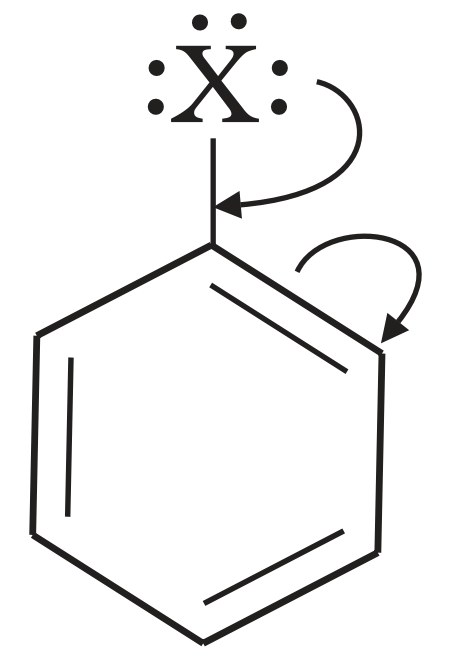
Draw other resonance structures related to the following structure and find out whether the functional group present in the molecule is ortho, para directing or meta directing.

$Fe ^{2+} \rightarrow Fe ^{3+}\left( E ^{\circ}=-0.77 V\right)$ and$Cu \rightarrow Cu ^{2+}\left( E ^{\circ}=-0.34 V\right) On$ the basis of these values, find out whether $Cu ^{2+}$ ion can be reduce by $Fe ^{2+}$ ion or not?
What are essential and non - essential amino acids? Give two examples of each type.
Out of C6H5CH2Cl and C6H5CHClC6H5, which is more easily hydrolysed by aqueous KOH?
Explain why,
The dipole moment of chlorobenzene is lower than that of cyclohexyl chloride?
The depression in freezing point of water observed for the same amount of acetic acid, trichloroacetic acid and trifluoroacetic acid increases in the order given above. Explain briefly.
Note: In the following questions a statement of assertion followed by a statement of reason is given. Choose the correct answer out of the following choices.
  1. Both assertion and reason are true and the reason is the correct explanation of assertion.
  2. Both assertion and reason are true and the reason is not the correct explanation of assertion.
  3. Assertion is true but the reason is false.
  4. Both assertion and reason are false.
  5. Assertion is false but reason is true.
Assertion: For measuring resistance of an ionic solution an AC source is used.
Reason: Concentration of ionic solution will change if DC source is used.