MCQ
Glycerine has
  • A
    One primary and two secondary $ - OH$ groups
  • One secondary and two primary $ - OH$ groups
  • C
    Three primary $ - OH$ groups
  • D
    Three secondary $ - OH$ groups

Answer

Correct option: B.
One secondary and two primary $ - OH$ groups
b
(b) $\begin{array}{*{20}{c}}
  {\begin{array}{*{20}{c}}
  {C{H_2} - OH} \\ 
  {|\,\,\,\,\,\,\,\,\,\,\,\,\,\,\,\,\,\,\,\,\,\,\,} 
\end{array}} \\ 
  {CH - OH\,\,} \\ 
   {|\,\,\,\,\,\,\,\,\,\,\,\,\,\,\,\,\,\,\,\,\,\,\,}  \\ 
  {C{H_2} - OH} 
\end{array}$
one secondary and two primary alcoholic groups.

Need a full question paper?

Generate a complete, print-ready paper with questions like this in minutes — across 16+ boards, with answer keys.
Start Generating Free

Similar questions

For a certain reaction, the rate $=k[A]^2[B]$, when the initial concentration of $A$ is tripled keeping concentration of $B$ constant, the initial rate would
Which is non linear ?
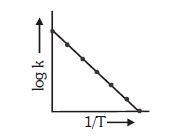
The temperature dependence of the rate constant $k$ is expressed as $k\, =\, A\,\, e^{-E_a /RT}$ . When a plot between $log\, k$ and $1/T$ is plotted we get the graph as shown. What is the value of slope in the graph ?
An organic compound $(A)$ (molecular formula $\left. C _{6} H _{12} O _{2}\right)$ was hydrolysed with dil. $H _{2} SO _{4}$ to give a carboxylic acid $(B)$ and an alcohol $(C).$ $'C'$ give white turbidity immediately when treated with anhydrous $ZnCl _{2}$ and conc. $HCl$. The organic compound $(A)$ is 
Which of the following carbocations is expected to be most stable?
In kjeldahl’s method, $CuS{O_4}$ acts as
The molar conductivity of $0.007 \,\mathrm{M}$ acetic acid is $20 \, \mathrm{~S} \, \mathrm{~cm}^{2} \,\mathrm{~mol}^{-1}$. What is the dissociation constant of acetic acid? (In $\times 10^{-5} \,\mathrm{~mol} \,\mathrm{~L}^{-1}$)

$[\Lambda_{\mathrm{H}^{+}}^{\circ}=350 \,\mathrm{~S}\, \mathrm{~cm}^{2}\, \mathrm{~mol}^{-1},\Lambda_{\mathrm{CH}_{3} \mathrm{COO}^{-}}^{\circ}=50\, \mathrm{~S}\, \mathrm{~cm}^{2}\, \mathrm{~mol}^{-1}]$

Given below are two statements: one is labelled as Assertion $(A)$ : and the other is labelled as Reason $(R)$. Assertion $(A)$ : Both rhombic and monoclinic sulphur exist as $S_5$ while oxygen exists as $O_2$.

Reason $(R)$ : Oxygen forms $\mathrm{p} \pi-\mathrm{p} \pi$ multiple bonds with itself and other elements having small size and high electronegativity like $\mathrm{C}, \mathrm{N}$, which is not possible for sulphur.

In the light of the above statements, choose the most appropriate answer from the options given below :

Electrostatic force of attraction between electron and the nucleus in the hydrogen atom is
The formula of some fluorides are given below. Which of them will combine further with fluorine