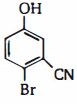
For a reaction taking place in a container in equilibrium with its surroundings, the effect of temperature on its equilibrium constant $K$ in terms of change in entropy is described by
$[A]$ With increase in temperature, the value of $K$ for exothermic reaction decreases because entropy change of the system is positive
$[B]$ With increase in temperature, the value of $K$ for endothermic reaction increases because unfavourable change in entropy of the surroundings decreases
$[C]$ With increase in temperature, the value of $K$ for endothermic reaction increases because the entropy change of the system is negative
$[D]$ With increase in temperature, the value of $K$ for exothermic reaction decreases because favourable change in entropy of the surrounding decreases