Question
Heartbeat.

Answer

  1. The rhythmic contraction and relaxation of the heart is called heartbeat.
  2. Each heartbeat includes one systole and one diastole. During systole the heart contracts and during diastole it relaxes.
  3. The rate with which the heart beats is called heart rate. The normal heart rate is 72 beats per minute.
  4. Tachycardia means faster heart rate of about more than 100 beats per minute.
  5. Bradycardia means slower heart rate that is below 60 beats per minute.

Need a full question paper?

Generate a complete, print-ready paper with questions like this in minutes — across 16+ boards, with answer keys.
Start Generating Free

Similar questions

Some deficiency symptoms of mineral are visible in young leaves while some appear in older leaves.
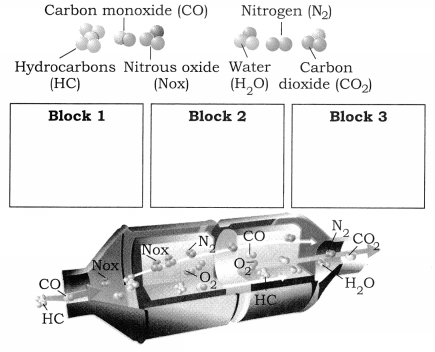
Observe the given diagram and answer the questions based on it.Image(a) Which apparatus is shown in the given diagram ?
(b) What is the function of this apparatus?
(c) What are the reactions that can take place in blocks 1, 2, and 3?
Comment on the following diagrams: A, B, C, D, G, P, Q, R, S are species.
What is an ecosystem service? List any four important ecosystem services provided by the natural ecosystems. Are you in favour or against levying a charge on the service provided by the ecosystem?
Human female is not fertile after menopause whereas males can produce gametes at any age after puberty. Analyse the statement and schematically represent a comparison between gametogenesis in males and females.
  1. Draw a diagram of a mature embryo sac of an angiosperm and label the following parts in it:
  1. Filiform apparatus.
  2. Synergids.
  3. Central cell.
  4. Egg cell.
  5. Polar nuclei.
  6. Antipodals.
  1. Write the fate of egg cell and polar nuclei after fertilisation.
While living in and on the host species, the animal parasite has evolved certain adaptations. Describe these adaptations with examples.
Categorise the following plants into hydrophytes, halophytes, mesophytes and xerophytes. Give reasons for your answers.
  1. Salvinia.
  2. Opuntia.
  3. Rhizophora.
  4. Mangifera.
Temperature fluctuations on the earth.
A flower of brinjal plant following the process of sexual reproduction produces 360 viable seeds.
Answer the following questions giving reasons:
How many megaspore mother cells are involved?