MCQ
Heat given to a body which raises its temperature by $1\ ^oC$ is
  • A
    Water equivalent
  • Heat capacity
  • C
    Specific heat
  • D
    Temperature gradient

Answer

Correct option: B.
Heat capacity
b
The specific heat is the amount of heat per unit mass required to raise the temperature by one degree Celsius. The most commonly associated unit for specific heat is $1 .$ Specific heat is used to calculate the amount of heat absorbed when energy is added to a material or substance through an increase in temperature over a defined range.

Need a full question paper?

Generate a complete, print-ready paper with questions like this in minutes — across 16+ boards, with answer keys.

Start Generating Free

Similar questions

The unit of mutual conductance of a triode valve is
An $\alpha$-particle, a proton and an electron have the same kinetic energy. Which one of the following is correct in case of their De-Broglie wavelength:
A capacitor of capacity $'C'$ is connected to a cell of $'V'\, volt$. Now a dielectric slab of dielectric constant ${ \in _r}$ is inserted in it keeping cell connected then
If the distance between a point source and screen is doubled, then intensity of light on the screen will become
Fermi level of energy of an intrinsic semiconductor lies
The moment of inertia of a rod of length $l$ about an axis passing through its centre of mass and perpendicular to rod is $I$. The moment of inertia of hexagonal shape formed by six such rods, about an axis passing through its centre of mass and perpendicular to its plane will be
An electric dipole is placed in non-uniform electric field. It may experience
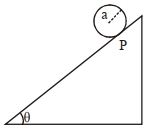
A solid disc of radius $'a'$ and mass $'m'$ rolls down without slipping on an inclined plane making an angle $\theta$ with the horizontal. The acceleration of the disc will be $\frac{2}{ b } g \sin \theta$ where $b$ is $........$. (Round off to the Nearest Integer)

$( g =$ acceleration due to gravity)

$(\theta=$ angle as shown in figure $)$
To project a body of mass $m$ from earth's surface to infinity, the required kinetic energy is (assume, the radius of earth is $R_E, g=$ acceleration due to gravity on the surface of earth) :
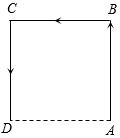
A particle moves along the sides $AB, BC, CD$ of a square of side $25 \,m$ with a velocity of $15$$m{s^{ - 1}}.$ Its average velocity is........$m{s^{ - 1}}$