Question
How can a period, group and block of the element be determined?

Answer

The group, period and the block of the element can be determined on the basis of its electronic configuration.
$i.$ Period: The principal quantum number of the valence shell corresponds to the period of the element.
e. g. The principal quantum number $(n)$ of the valence shell $(3s^1$) of $Na (1s^2 2s^2 2p^6 3s^1)$ is $3.$ This corresponds to third period.
$ii.$ Block: The subshell in which the last electron enters, corresponds to the block of the elements $($with exception being He$)$.
e. g. The subshell $3d ($in which the last electron enters) for $Sc (1s^2 2s^2 2p^6 3s^2 3p^6 3d^1 4s^2)$ corresponds to d block.
$iii.$ Group: The group of the element is determined on the basis of number of electrons present in the outermost or penultimate $[$next to outermost, i.e. $(n-1)]$ shell:
For $s-$block elements, group number $=$ number of valence electrons.
For $p-$block elements, group number $= 18 –$ number of electrons required to complete octet.
For $d-$block elements, group number $= 2 +$ number of $(n-1)d$ electrons.

Need a full question paper?

Generate a complete, print-ready paper with questions like this in minutes — across 16+ boards, with answer keys.
Start Generating Free

Similar questions

Derive the equation $\lambda=\frac{\left(-\frac{ dN }{ dt }\right)}{ N }$ and write what does $\lambda$ denotes.
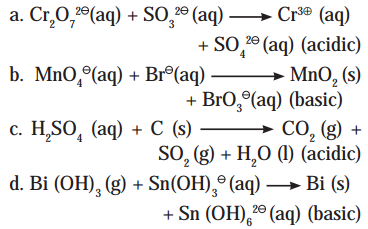
Balance the following reactions by oxidation number methodImage
Would it be easier to drink water with a straw on the top of the Mount Everest or at the base ? Explain.
Match the following:
Law Statement
i.Law of definite proportionsa.When two elements A and B form more than one compounds, the masses of element B that combine with a given mass of A are always in the ratio of small whole numbers
ii.Gay Lussac’s lawb.Equal volumes of all gases at the same temperature and pressure contain equal number of molecules
iii.Law of multiple proportionsc.When gases combine or are produced in a chemical reaction they do so in a simple ratio by volume, provided all gases are at same temperature and pressure
iv.Avogadro’s lawd.A given compound always contains exactly the same proportion of elements by weight
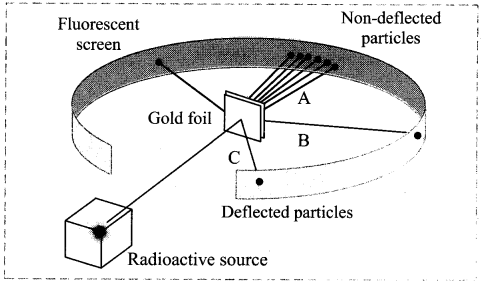
With reference to the representative model of the gold foil experiment, answer the following questions:

Image

i. What evidence regarding an atom do lines A, B and C provide?
ii. How does Rutherford’s model contradict Thomson’s plum-pudding model?
iii. What results would you expect from the experiment if Thomson’s plum-pudding model was correct?
How are the following ions of group $2$ elements biologically important? $i. Mg^{2+} \ \ ii. Ca^{2+}$
Draw structures representing staggered and eclipsed conformations of ethane using:
i. Sawhorse projection
ii. Newman projection
Write a short note on
a. Vapour pressure.
b. Surface tension
c. Viscosity.
Explain intramolecular and intermolecular hydrogen bond with suitable examples.
Explain: Molar mass.