Question
How can reverberations in a big hall or auditotium be reduced?`

Answer

Reverberations in a big hall or auditorium can be reduced by the following methods:
  1. Panels made of sound absorbing materials are put on the walls and ceilings of hall and auditorium.
  2. Carpets are put on the floor to absorb sound and reduce reverberations.
  3. Heavy curtains are put on doors and windows to absorb sound and reduce reverberations.
  4. The seats in the hall are made from materials having sound absorbing properties.

Need a full question paper?

Generate a complete, print-ready paper with questions like this in minutes — across 16+ boards, with answer keys.
Start Generating Free

Similar questions

There is a large group of materials P which can be divided into three groups Q, R, and S on the basis of their properties. The substances belonging to group Q can be solids, liquids or gases. The solids belonging to group Q are usually electrical insulators. Most of the substances of group R are solids which are good conductors of electricity. The substances belonging to group S are neither insulators like Q nor good conductors like R. The properties of S are intermediate between those of Q and R.
  1. What could the group of materials P be?
  2. Name the substances Q. Give two examples of such substances.
  3. Name the substances R. Write two examples of such substances.
  4. Name the substances S. Give two examples of such substances.
  5. Out of Q, R and S, which substances are malleable and ductile?
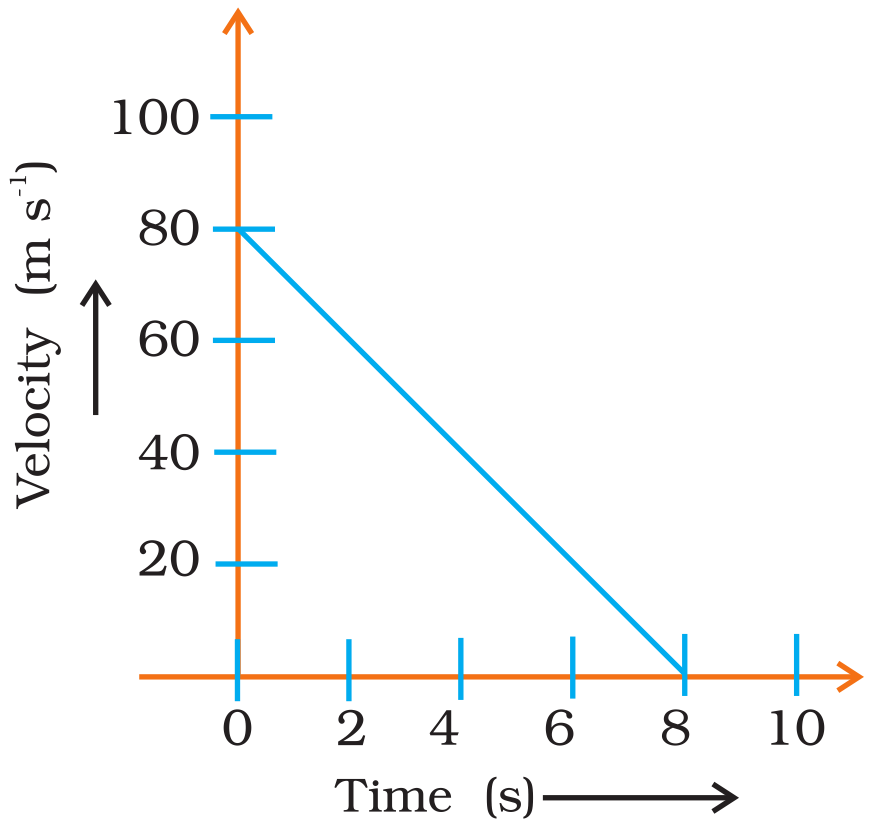
Velocity versus time graph of a ball of mass $50g$ rolling on a concrete floor is shown in Fig. Calculate the acceleration and frictional force of the floor on the ball.
A boy of mass $50\ kg$ running at $5\ m/s$ jumps on to a $20\ kg$ trolley travelling in the same direction at $1.5\ m/s.$ What is their common velocity?
State the main points of difference between homogeneous and heterogeneous mixtures.
What is the role of SER in liver cells of vertebrates?
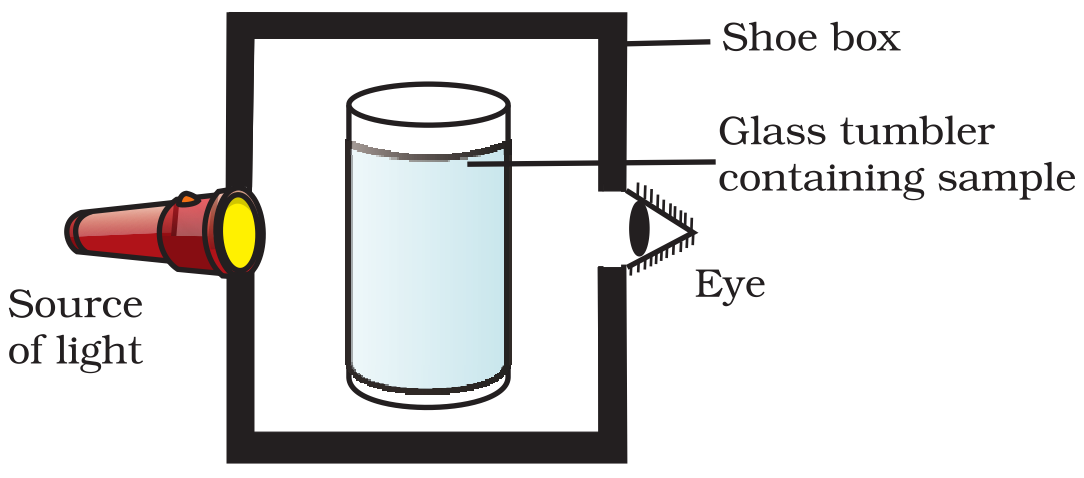
A group of students took an old shoe box and covered it with a black paper from all sides. They fixed a source of light $($a torch$)$ at one end of the box by making a hole in it and made another hole on the other side to view the light. They placed a milk sample contained in a beaker/ tumbler in the box as shown in the they were amazed to see that milk taken in the tumbler was illuminated. They tried the same activity by taking a salt solution but found that light simply passed through it?
  1. Explain why the milk sample was illuminated. Name the phenomenon involved.
  2. Same results were not observed with a salt solution. Explain.
  3. Can you suggest two more solutions which would show the same effect as shown by the milk solution?
A car is travelling along the road at $8ms^{-1}.$ It accelerates at $1ms^{-2}$ for a distance of $18m.$ How fast is it then travelling?
With the help of a labelled diagram, describe the method of separating ammonium chloride from a mixture of ammonium chloride and common salt. Mention the difference in the properties of ammonium chloride and sodium chloride which has made this separations possible.
State the various postulates of Dalton’s atomic theory of matter.
A girl of mass $50\ kg$ jumps out of a rowing boat of mass $300\ kg$ on to the bank, with a horizontal velocity of $3\ m/s.$ With what velocity does the boat begin to move backwards?