Question
How do you distinguish between humification and mineralisation?

Answer

Humification leads to accumulation of a dark coloured amorphous substance called humus that is highly resistant to microbial action and undergoes decomposition at an extremely slow rate. Being colloidal in nature it serves as a reservoir of nutrients. The humus is further degraded by some microbes and release of inorganic nutrients occurs by the process known as mineralisation.

Need a full question paper?

Generate a complete, print-ready paper with questions like this in minutes — across 16+ boards, with answer keys.
Start Generating Free

Similar questions

  1. One of the codons on mRNA IS AUG. Draw the structure of RNA adapter molecule for this codon.
  2. Name the RNA polymerase that transcribes RNA in eukaryotes.
  3. What is unique about the amino acid this RNA binds with?
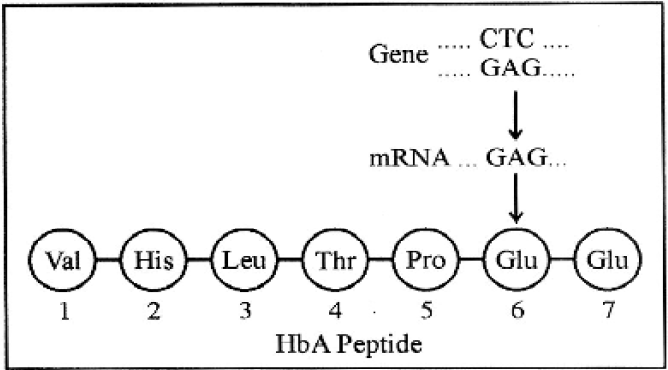
Given below is the representation of amino acid composition of the relevant translated portion of b-chain of haemoglobin, related to the shape of human red blood cells.
  1. Is this representation indicating a normal human or a sufferer from certain related genetic disease? Give reason in support of your answer.
  2. What difference would be noticed in the phenotype of the normal and the sufferer related to this gene?
  3. Who are likely to suffer more from the defect related to the gene represented – the males, the females or both males and females equally? Andwhy?
F1 progeny of pea plant bearing violet flowers and snapdragon plant bearing red flowers were selfed to produce their respective F2 progeny. Compare the phenotypes, the genotypes and the pattern of inheritance of their respective F2 progeny.
Explain the evolutionary theory of living form based on the observations of Charles Darwin.
Expressed your views in detail to save an unbalanced ecosystem.
Explain three outbreeding devices.
How is DNA recombinant technology helpful in detecting the presence of mutated genes in the cancer patients?
Answer the following questions:
Still it is observed that it does not form a continuous layer around the pollen grain. Give reason.
What are the various routes by which transmission of human immunodeficiency virus takes place?
From what you have learnt, can you tell whether enzymes are bigger or DNA is bigger in molecular size? How did you know?