Question
  1. How does basic character of oxides and hydroxides down the group in alkali metals change? Why?
  2. How does reducing power of elements vary in Group I?

Answer

  1. It goes on increasing down the group due to decrease in ionisation energy and increase in metallic character.
  2. Reducing power of 'Li' is highest, Na is lowest, then it goes on increasing:

Li > Cs > Rb > K > Na.

Need a full question paper?

Generate a complete, print-ready paper with questions like this in minutes — across 16+ boards, with answer keys.
Start Generating Free

Similar questions

Identify the most stable species in the following set of ions giving reasons:
$_\ominus\ \ \ \ \ \ \ \ _\ominus\ \ \ \ \ \ \ \ \ \ \ \ _\ominus\ \ \ \ \ \ \ \ \ \ \ \ _\ominus\\\text{CH}_3,\ \text{CH}_2\text{Cl},\ \text{CHCl}_2,\ \text{CCl}_3$
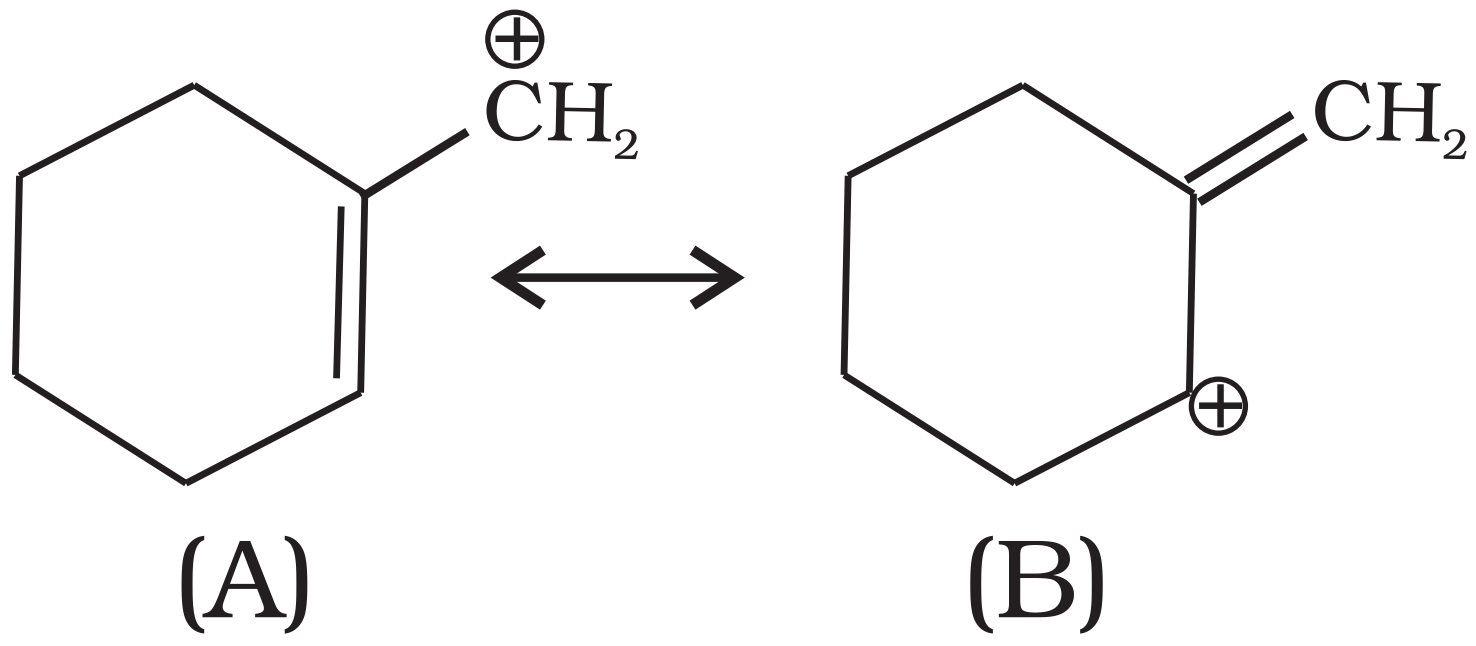
“Stability of carbocations depends upon the electron releasing inductive effect of groups adjacent to positively charged carbon atom involvement of neighbouring groups in hyperconjugation and resonance.”
Which of the following ions is more stable? Use resonance to explain your answer.

Define hybridisation. Explain the structure of C2H2 with orbital diagram.
Equilibrium constant, $K_c$ for the reaction $N _2(g)+3 H _2(g) \rightleftharpoons 2 NH _3(g)$ at 500 K is 0.061
At a particular time, the analysis shows that composition of the reaction mixture is $3.0 mol L ^{-1} N_2$, $2.0 mol L ^{-1} H _2$ and $0.5 mol L ^{-1} NH _3$. Is the reaction at equilibrium? If not in which direction does the reaction tend to proceed to reach equilibrium?
Comment on the spontaneity of a reaction at constant temperature and pressure in the following cases:

  1. $\Delta\text{H}<0\text{ and }\Delta\text{S}>0$

  2. $\Delta\text{H}>0\text{ and }\Delta\text{S}<0$

  3. $\Delta\text{H}<0\text{ and }\Delta\text{S}<0$

  4. $\Delta\text{H}>0\text{ and }\Delta\text{S}>0$
Give an example of disproportionation reaction.
Define oxidation and reduction in terms of oxidation number.
How do you express the bond strength in terms of bond order?
Draw formulas for the first five members of homologous series beginning with the following compounds.
H-CH=CH2.