Question
How does $\beta$-galactosidase coding sequence act as a selectable marker? Explain. Why is it a preferred selectable marker to antibiotic resistance genes?

Answer

  1. Presence of a chromogenic substrate gives blue colour, if the plasmid in the bacteria does not have an insert. (non-recombinants)
  2. With the insert do not produce any colour, recombinant colonies.
  3. Selection of recombinants due to inactivation of antibiotics, requires simultaneous plating on two plates having different antibiotics/process is more cumbersome.

Need a full question paper?

Generate a complete, print-ready paper with questions like this in minutes — across 16+ boards, with answer keys.
Start Generating Free

Similar questions

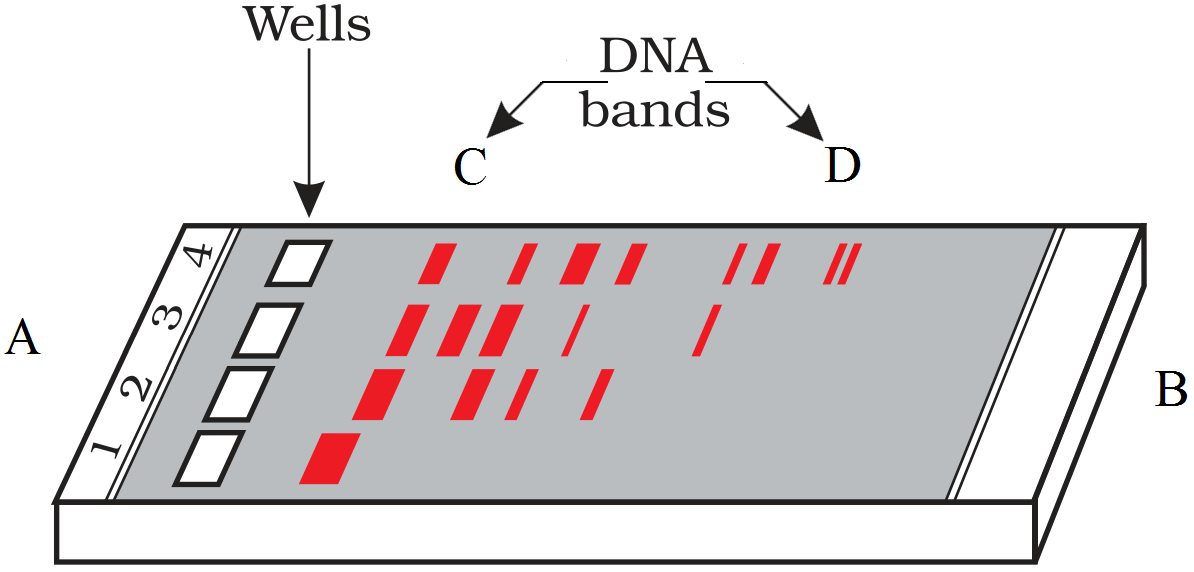
Rajesh was doing gel electrophoresis to purify DNA fragments. Given below is the sketch of the observations of the experiment performed by him.

  1. At which end he would have loaded the samples and where?
  2. Analyse the reason for different positions taken up by the DNA bands.
  3. Elaborate the step he would have followed to visualize DNA bands.


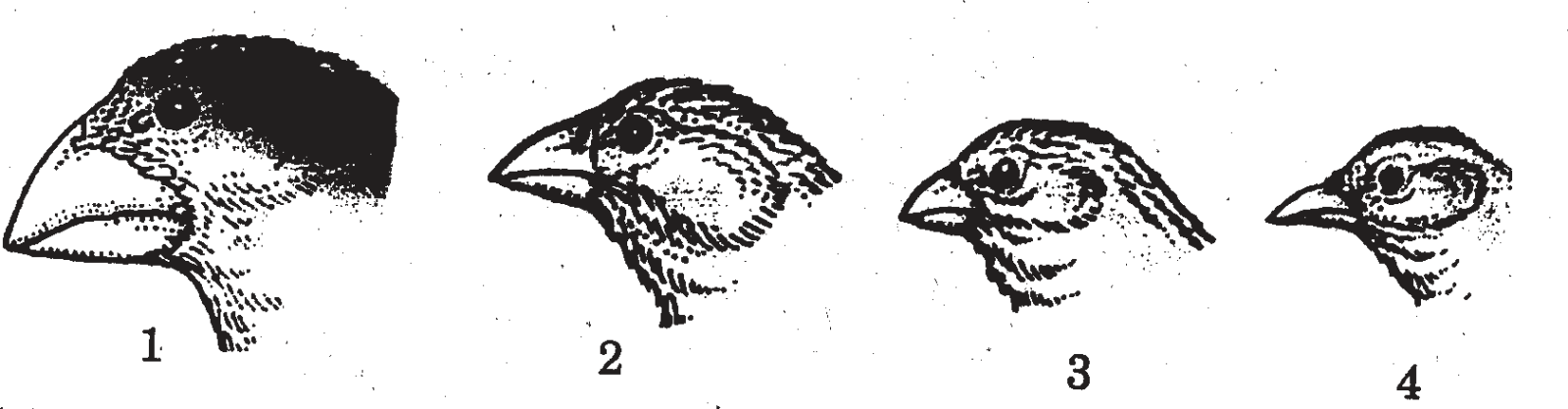
  1. Write your observations on the variations seen in the Darwin’s finches shown above.
  2. How did Darwin explain the existence of different varieties of finches on Galapagos Islands?
Branching descent and natural selection are the two key concepts of Darwinian Theory of Evolution. Explain each concept with the help of a suitable example.
  1. Do all pollen grains remain viable for the same length of time? Support your answer with two suitable examples.
  2. How are pollen grains stored in pollen banks? State the purpose of storing pollen grains in these banks.
Construct an ideal pyramid of energy when 1,000,000 joules of sunlight is available. Label all its trophic levels.
What is an ecosystem. Explain the structure of ecosystem.
Differentiate between pollination and fertilization is angiosperms.
List any three natural world heritage sites of India.
Discuss the significance of heavy isotope of nitrogen in the Meselson and Stahl’s experiment.
  1. Give the scientific name of the soil bacterium which produces crystal (Cry) proteins.
  2. How are these proteins useful in agriculture?
  3. What do the differently written terms ‘Cry’ and ‘cry’ represent respectively?