Question
  1. How is artificial hybridisation considered a crop improvement programme?
  2. Explain the process of artificial hybridisation, if
  1. Female parent bears bisexual flowers.
  2. Female parent bears unisexual flowers.

Answer

  1. Artificial hybridisation involves crossing of different varieties or species or even different genera to combine the desirable characters of the two parents to produce a commercially superior variety.
  2.  
  1. When the female parent bears bisexual flowers:
  • Emasculation is necessary; it is the removal of anthers/ stamens before the pollen grains mature.
  • The emasculated flower is bagged to prevent contamination of the stigma with unwanted pollen grains.
  • When the stigma attains receptivity, the pollen grains collected from the selected male parent are dusted on the stigma.
  • The flower is rebagged and allowed for further development.
  1. When the female parent bears unisexual flowers:
  • There is no need for emasculation.
  • The female flower is bagged before the stigma becomes receptive.
  • When the stigma becomes receptive, the pollen grains collected from the selected male parent are dusted on the stigma.
  • The flower is rebagged and allowed for further development.

Need a full question paper?

Generate a complete, print-ready paper with questions like this in minutes — across 16+ boards, with answer keys.
Start Generating Free

Similar questions

List the advantages of recombinant insulin.
With a neat, labelled diagram, describe the parts of a mature angiosperm embryo sac. Mention the role of synergids.
Give the term/ reason:
Sperm cannot reach ovum without seminal plasma.
  1. In humans, males are heterogametic and females are homogametic. Explain. Are there any examples where males are homogametic and females heterogametic?
  2. Also describe as to, who determines the sex of an unborn child? Mention whether temperature has a role in sex determination.
What are the reasons for biodiversity conservation?
How bacterial cells are made competent to take up DNA?
Taking a small pond as an example of an ecosystem, list the four components of this ecosystem. How do these components function as a unit in a small pond?

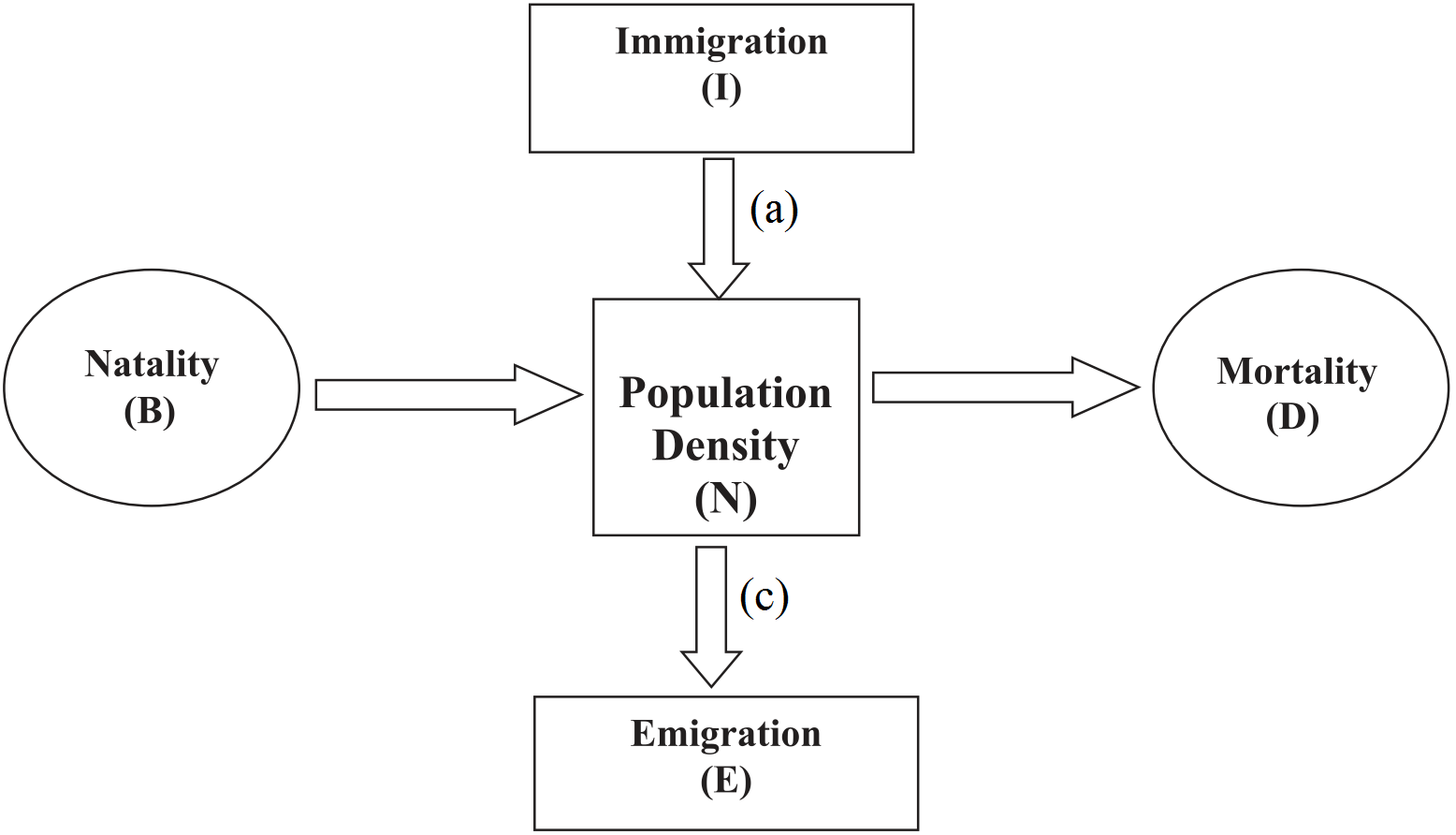
  1. Which of the above represents the increase or decrease of population?
  2. If N is the population density at time t, then what would be its density at time (t + 1)? Give the formula.
  3. In a barn there were 30 rats. 5 more rats enter the barn and 6 out of the total rats were eaten by the cats. If 8 rats were born during the time period under consideration and 7 rats left the barn, find out the resultant population at time (t + 1).
  4. If a new habitat is just being colonized, out of the four factors affecting the population growth, which factor contributes the most?
(a) Write the name of primates existing on earth about 15 million years ago. Write its important characteristics also?
(b) (i) From where did the animals similar to human being meet?
(ii) In which sequence were neanderthal, homohabilis and homo erectus evolved on earth?
(iii) When did modern man evolve on this planet?
Give a genetic explanation for the following cross. When a tall pea plant with round seeds was crossed with a dwarf pea plant with wrinkled seeds then all the individual of F1-population were tall with round seeds. However selfing among F1-population led to a 9:3:3:1 phenotypic ratio.