Question
How is movement in plants different from that in animals?
| Movement in plants | Movement in animals |
| It involves bending, twisting, and elongation of plant parts. | It involves displacement from one place to another. |
| Movement is said to be non-locomotory. | Movement is said to be non-locomotory. |
| Plants generally move to secure support, capture food or find water or soil nutrients. | Animals generally move to find mates, for protection from environmental changes, and to capture food. |
| Plant movements are confined to only some plant parts. | Animal movements involve the movement of the entire body. |
| Plant movements are often related to growth. | Animal movements are not related to growth. |
| No muscles are involved in plant movements. | Muscles are involved in animal movements. |
Generate a complete, print-ready paper with questions like this in minutes — across 16+ boards, with answer keys.
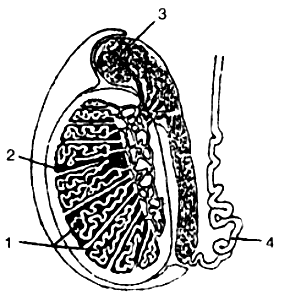
| Column 1 | Column 2 | ||
| 1 | SPM | a | Release of methane |
| 2 | Ozone hole | b | Add to greenhouse effect |
| 3 | Melting of polar ice | c | Affects oxygen transport by blood |
| 4 | Acid rain | d | Rise in sea level |
| 5 | Green house effect | e | Bronchitis & inflammation of the lungs |
| 6 | Melting of permafrost | f | Erosion of buildings |
| 7 | Carbon monoxide | g | Chlorofluorocarbons |
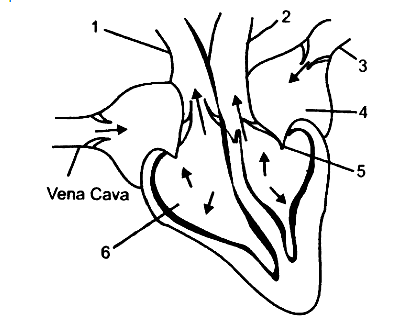
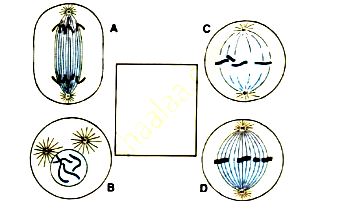
| Column I | Column II | ||
| (i) | Grana | (a) | Decomposers |
| (ii) | Autotrophs | (b) | Light reaction |
| (iii) | By-products of photosynthesis | (c) | Animals |
| (iv) | Photolysis | (d) | Oxygen |
| (v) | Bacteria and fungi | (e) | Stimulated by light |
| (vi) | Chloroplast | (f) | Power |
| (vii) | Oxygen and water | (g) | Raw material |
| (viii) | Sunlight | (h) | Machinery |
| (ix) | $CO_2$ and water | (i) | End products |
| (x) | Glucose (sugar) | (j) | Workrooms |
| (xi) | Cells in the leaf | (k) | By-products. |