MCQ
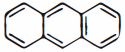
How many geometrical isomers are possible for the above compound ?
  • A
    $0$
  • $2$
  • C
    $3$
  • D
    $4$

Answer

Correct option: B.
$2$
b
$(b)$ cis & trans.

Need a full question paper?

Generate a complete, print-ready paper with questions like this in minutes — across 16+ boards, with answer keys.
Start Generating Free

Similar questions

How many resonance structures are there for anthracene ?
The moles of $Ag^+$ which must be added to decrease the concentration of $Cl^-$ from $4 × 10^{-5}$ $M$ to $10^{-5}\,M$ in $100$ $ml$ solution, if $K_{sp}$ for $AgCl$ is $10^{-10}\,M^2$ at $25\,^oC$
The compound that does not give a blue colour in Lassaigne's test for nitrogen is :
Match the entries in Column $I$ with the correctly related quantum number$(s)$ in Column $II$. Indicate your answer by darkening the appropriate bubbles of the $4 \times 4$ matrix given in the $ORS$.
Column $I$ Column $II$
$(A)$ Orbital angular momentum of the electron in a hydrogen-like atomic orbital $(p)$ Principal quantum number
$(B)$ A hydrogen-like one-electron wave function obeying Pauli principle $(q)$ Azimuthal quantum number
$(C)$ Shape, size and orientation of hydrogen-like atomic orbitals $(r)$ Magnetic quantum number
$(D)$ Probability density of electron at the nucleus in hydrogen-like atom $(s)$ Electron spin quantum number
Beryllium shows diagonal relationship with
Enol percentage of following compound is maximum
Chromyl chloride test is for
In nucleophilic aliphatic substitution, the nucleophiles are generally
$H_2 + Cl_2 \longrightarrow 2HCl$ ; $\Delta H = -x\,kJ$
$NaCl + H_2SO_4 \longrightarrow NaHSO_4 + HCl$ ; $\Delta H = -y\,kJ$
$2H_2O + 2Cl_2  \longrightarrow 4HCl + Cl_2$     ;   $\Delta H = -z\,kJ$
From above equation the value of $\Delta H_f$ of $HCl$ is
Which of the following expression is true for an ideal gas.