MCQ
How many ionisation energies can carbon have
- A$1$
- B$2$
- ✓$4$
- D$6$
Generate a complete, print-ready paper with questions like this in minutes — across 16+ boards, with answer keys.
(Henry's law constant for $\mathrm{CO}_{2}$ at $298\, \mathrm{~K}$ is $1.67 \times 10^{3}$ $bar$)

| List-I (Saccharides) | List-II (Glycosidic-linkages found) |
| (A) Sucrose | (I) $\alpha$ 1-4 |
| (B) Maltose | (II) $\alpha 1-4$ and $\alpha 1-6$ |
| (C) Lactose | (III) $\alpha 1-\beta 2$ |
| (D) Amylopectin | (IV) $\beta 1-4$ |
Statement $I$ : The rate law for the reaction $A+B \rightarrow C$ is rate $(r)=k[A]^2[B]$. When the concentration of both $\mathrm{A}$ and $\mathrm{B}$ is doubled, the reaction rate is increased " $\mathrm{x}$ " times.
Statement $II$ :
(Image)
The figure is showing "the variation in concentration against time plot" for a $"y"$ order reaction. The value of $x+y$ is . . . . . . 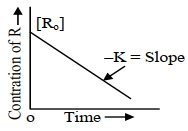
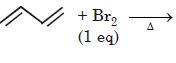
Major Product $(A)$ will be