Question
How will you separate common salt, sand and iron filings from their mixture?

Answer

Mixture of common salt, sand and iron filings can be separated by using magnet first. A horse-shoe magnet is moved on the surface of the mixture. The iron filings are attracted by the magnet, they cling to the poles of the magnet and get separated. This process is repeated a number of times till complete separation of iron filings occur leaving behind mixture of common salt and sand. The mixture of common salt and sand is then dissolved in water and then filtered with the help of filter paper. Sand remains as residue on the filter paper while common salt solution is obtained as filtrate .The filtrate is then evaporated to get crystals of common salt.

Need a full question paper?

Generate a complete, print-ready paper with questions like this in minutes — across 16+ boards, with answer keys.

Start Generating Free

Similar questions

A car is travelling at 20m/s along a road. A child runs out into the road 50m ahead and the car driver steps on the brake pedal. What must the car's deceleration be if the car is to stop just before it reaches the child?
A car travels 100km at a speed of 60km/h and returns with a speed of 40km/h. Calculate the average speed for the whole journey.
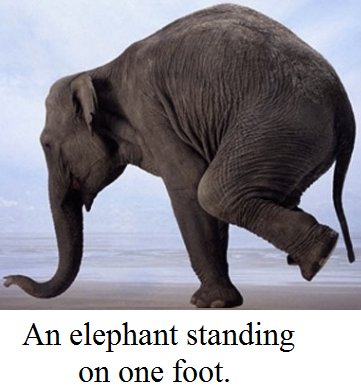
An elephant weighing 40,000N stands on one foot of area 1000cm2 whereas a girl weighing 400N is standing on one ‘stiletto’ heel of area 1cm2.

  1. Which of the two, elephant or girl, exerts a larger force on the ground and by how much?
  2. What pressure is exerted on the ground by the elephant standing on one foot?
  3. What pressure is exerted on the ground by the girl standing on one heel?
  4. Which of the two exerts larger pressure on the ground: elephant or girl?
  5. What is the ratio of pressure exerted by the girl to the pressure exerted by the elephant?
Which has more atoms, 50g of aluminium or 50g of iron? Illustrate your answer with the help of calculations.
(Atomic masses: Al = 27u; Fe = 56u)

A body of 2kg falls from rest. What will be its kinetic energy during the fall at the end of 2s? (Assume g = 10m/s2)

A ball X of mass 1kg travelling at 2m/s has a head-on collision with an identical ball Y at rest. X stops and Y moves off. Calculate the velocity of Y after the collision.

When a beam of sunlight enters a room through a window, we can see tiny particles X suspended in a gas (or rather a mixture of gases) Y which are moving rapidly in a very haphazard manner.
  1. What could particles X be?
  2. Name the gas (or mixture of gases) Y.
  3. What is the phenomenon exhibited by particles X known as?
  4. What is causing the movement of particles X?
  5. What conclusion does the existence of this phenomenon give us about the nature of matter?
Explain the various preventive measures against insect pests.
  1. How does a boat float in water?
  2. A piece of steel has a volume of 12cm3, and a mass of 96g. What is its density: (i) in g/cm(ii) in kg/m3?
List five characteristics by which compounds can be distinguished from mixtures.