MCQ
"Hybridisation of central atom does not always change due to back bonding". This  statement is valid for which of the following compounds ?

$(i)\, {CCl_3}^-$       $(ii)\,CCl_2$     $(iii)\, (SiH_3)_2O$     $(iv)\, N(SiH_3)_3$

  • $(i), (ii)$
  • B
    $(i), (iii)$
  • C
    $(ii), (iii)$
  • D
    All

Answer

Correct option: A.
$(i), (ii)$
a
When there is back bonding from central to side atom change in hybridization takes place. Back bonding takes place when one atom has vacant orbital and one has lone pairs.

So central atom has a lone pair and side atom must have vacant orbital

So : $CCl _3^{-}$

$N \left( SiH _3\right)_3$

$sp ^3- sp ^2$

Need a full question paper?

Generate a complete, print-ready paper with questions like this in minutes — across 16+ boards, with answer keys.

Start Generating Free

Similar questions

Which of the following statement is not correct about diborane?
Pure $'N_2'$ obtain by
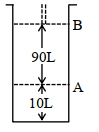
Consider the figure provided.

$1 \mathrm{~mol}$ of an ideal gas is kept in a cylinder, fitted with a piston, at the position $\mathrm{A}$, at $18^{\circ} \mathrm{C}$. If the piston is moved to position $B$, keeping the temperature unchanged, then ' $x$ ' $L$ atm work is done in this reversible process.

$\mathrm{x}=$ . . . . . . $\mathrm{L} \mathrm{atm.} \mathrm{(nearest} \mathrm{integer)}$

[Given : Absolute temperature $={ }^{\circ} \mathrm{C}+273.15$, $\left.\mathrm{R}=0.08206 \mathrm{~L} \mathrm{~atm} \mathrm{~mol}^{-1} \mathrm{~K}^{-1}\right]$
Consider the partial decomposition of $A$ is

$2A(g)  \rightleftharpoons  2B(g) + C(g)$
at equilibrium $700\, mL$ gaseous mixture contains $100\, mL$ of gas $C$ at $10\, atm$ and $300\, K$. What is the value of $K_P$ for the reaction

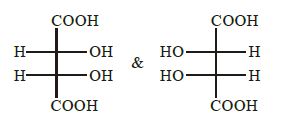
are related as
Phosphine may be produced by adding water to
$\begin{array}{*{20}{c}}
  {\,\,\,\,\,\,\,\,\,\,\,\,\,O} \\ 
  {\,\,\,\,\,\,\,\,\,\,\,\,\,||} \\ 
  {\mathop {C{H_3}MgBr}\limits_{(excess)}  + Et - O - C - O - Et\xrightarrow[{(2){H^ \oplus }}]{}(A)} 
\end{array}$ ; Product $A$ is
Assertion : A chelating ligand must possess two or more lone pairs at such a distance that it may form suitable strain free rings at the metal ion.

Reason : $H_2N-NH_2$ is a chelating ligand.

Among the following the set of parameters that represents path functions, is

$(a)\,\,q + w$                         $ (b)\,\,q$

$(c)\,\,w$                                 $ (d)\,\,H -TS$

In hydrogen atomic spectrum, a series limit is found at $12186.3\, cm^{-1}$. Then it belong to