Question
$I ^{\text {st }}$ it possible that the sum and difference of two vectors be in same direction? If yes, then under what circumstances?

Answer

Yes, it is possible. This will be possible when both the vectors are unequal in magnitude but equal in direction.

Need a full question paper?

Generate a complete, print-ready paper with questions like this in minutes — across 16+ boards, with answer keys.
Start Generating Free

Similar questions

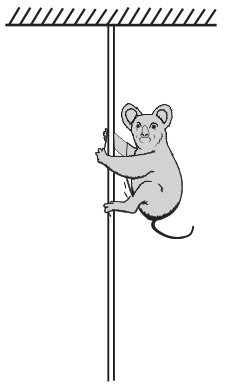
A monkey of mass 40kg climbs on a rope (Fig.) which can stand a maximum tension of 600 N. In which of the following cases will the rope break: the monkey,

  1. Climbs up with an acceleration of 6ms-2.
  2. Climbs down with an acceleration of 4ms-2.
  3. Climbs up with a uniform speed of 5ms-1.
  4. Falls down the rope nearly freely under gravity?

(Ignore the mass of the rope).

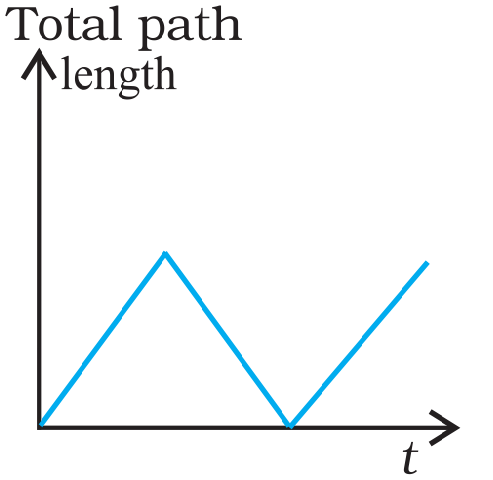
Look at the graphs carefully and state, with reasons, which of these cannot possibly represent one-dimensional motion of a particle.

A pair of equal and opposite forces acting on a body along two different lines of action constitute a _________.
A one meter long glass tube is open at both ends. One end of the tube is dipped into a mercury cup, the tube is kept vertical and the air is pumped out of the tube by connecting the upper end to a suction pump. Can mercury be pulled up into the pump by this process?
Given below are some functions of x and t to represent the displacement (transverse or longitudinal) of an elastic wave. State which of these represent (i) a travelling wave, (ii) a stationary wave or (iii) none at all:
$\text{y}=\cos\text{x}\sin\text{t}+\cos2\text{x}\sin2\text{t}$
Is gravitational potential a scalar or a vector? Why?
Is the principle of superposition valid for stationary waves?
Two blocks A and B of mass mA and mB respectively are kept in contact on a frictionless table. The experimenter pushes the block A from behind so that the blocks accelerate. If the block A exerts a force F on the block B, what is the force exerted by the experimenter on A?
Which is greater: nuclear force or electrostatic force?
In a rotating body, $\text{a}=\alpha\text{r}$ and $\text{v}=\omega\text{r}.$ Thus $\frac{\text{a}}{\alpha}=\frac{\text{v}}{\omega}.$ Can a co you use the theorems of ratio and proportion studied in algebra so as to write

$\frac{\text{a}+\alpha}{\text{a}-\alpha}=\frac{\text{v}+\omega}{\text{v}-\omega}$