MCQ
Identify product and name of reaction.
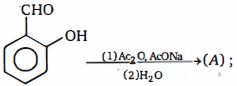
- A
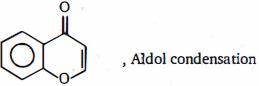
- ✓
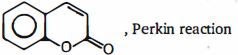
- C
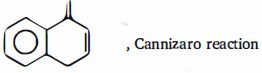
- D


Generate a complete, print-ready paper with questions like this in minutes — across 16+ boards, with answer keys.
| List $I$ | List $II$ |
| $A$ Torque | $I$ ${\left[\mathrm{M}^1 \mathrm{~L}^1 \mathrm{~T}^{-2} \mathrm{~A}^{-2}\right]}$ |
| $B$ Magnetic fileld | $II$ $\left[\mathrm{L}^2 \mathrm{~A}^1\right]$ |
| $C$ Magneti moment | $III$ ${\left[\mathrm{M}^1 \mathrm{~T}^{-2} \mathrm{~A}^{-1}\right]}$ |
| $D$ permeability of free space | $IV$ $\left[\mathrm{M}^1 \mathrm{~L}^2 \mathrm{~T}^{-2}\right]$ |
Choose the correct answer from the options given below :
($A$) The maximum voltage range is obtained when all the components are connected in series
($B$) The maximum voltage range is obtained when the two resistors and one galvanometer are connected in series, and the second galvanometer is connected in parallel to the first galvanometer
($C$) The maximum current range is obtained when all the components are connected in parallel
($D$) The maximum current range is obtained when the two galvanometers are connected in series and the combination is connected in parallel with both the resistors
Reason : Cyclotron frequency depends upon the velocity