MCQ
Identify the factor from the following that does not affect electrolytic conductance of a solution.
- AThe nature of the electrolyte added.
- ✓The nature of the electrode used.
- CConcentration of the electrolyte.
- DThe nature of solvent used.
Generate a complete, print-ready paper with questions like this in minutes — across 16+ boards, with answer keys.
$[A]$ With increase in temperature, the value of $K$ for exothermic reaction decreases because entropy change of the system is positive
$[B]$ With increase in temperature, the value of $K$ for endothermic reaction increases because unfavourable change in entropy of the surroundings decreases
$[C]$ With increase in temperature, the value of $K$ for endothermic reaction increases because the entropy change of the system is negative
$[D]$ With increase in temperature, the value of $K$ for exothermic reaction decreases because favourable change in entropy of the surrounding decreases
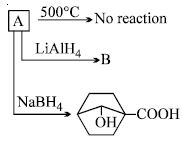
Reason : There is delocalisation of electrons from filled $d$ orbitals into the empty orbitals on the $CO$ ligands.
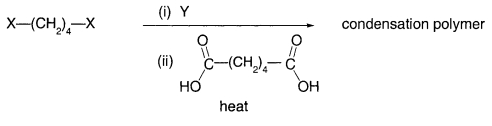
$(A)$ $X = COOCH _3, Y = H _2 /$ Ni/heat
$(B)$ $X = CONH _2, Y = H _2 /$ Ni/heat
$(C)$ $X = CONH _2, Y = Br _2 / NaOH$
$(D)$ $X = CN , Y = H _2 /$ Ni/heat