MCQ
Identify the property which does not reflect the periodicity of the elements.
- ABonding behaviour
- BElectronegativity
- CIonization potential
- ✓Neutron $-$ proton ratio
Generate a complete, print-ready paper with questions like this in minutes — across 16+ boards, with answer keys.
$\Delta_{\text {vap }} \mathrm{H}-\Delta_{\text {vap }} \mathrm{U}=...... \times 10^{2} \,\mathrm{~J}\, \mathrm{~mol}^{-1}$. (Round off to the NearestInteger)
$\left[\right.$ Use : $\left.R=8.31\, \mathrm{~J}\, \mathrm{~mol}^{-1}\, \mathrm{~K}^{-1}\right]$
[Assume volume of $\mathrm{H}_{2} \mathrm{O}(\mathrm{l})$ is much smaller than volume of $\mathrm{H}_{2} \mathrm{O}(\mathrm{g})$. Assume $\mathrm{H}_{2} \mathrm{O}(\mathrm{g})$ treated as an ideal gas]
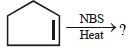
$(II)\, O^+_2 ,NO,N^-_2$ have same bond order of $2 \frac{1}{2}$
$(III)$ Bond order can assume any value including zero upto four
$(IV)\, NO^-_3$ and $BO^-_3$ have same bond order for $X - O$ bond (where $X$ is central atom)