MCQ
If $A = \left[ {\begin{array}{*{20}{c}}i&0\\0&i\end{array}} \right]$ and $B = \left[ {\begin{array}{*{20}{c}}0&{ - i}\\{ - i}&0\end{array}} \right]$, then $(A + B)(A - B)$ is equal to
  • ${A^2} - {B^2}$
  • B
    ${A^2} + {B^2}$
  • C
    ${A^2} - {B^2} + BA + AB$
  • D
    None of these

Answer

Correct option: A.
${A^2} - {B^2}$
a
(a) Here $AB = \left[ {\begin{array}{*{20}{c}}i&0\\0&i\end{array}} \right]\,\left[ {\begin{array}{*{20}{c}}0&{ - i}\\{ - i}&0\end{array}} \right] = \left[ {\begin{array}{*{20}{c}}0&1\\1&0\end{array}} \right]$

and $BA = \left[ {\begin{array}{*{20}{c}}0&{ - i}\\{ - i}&0\end{array}} \right]\left[ {\begin{array}{*{20}{c}}i&0\\0&i\end{array}} \right]\, = \left[ {\begin{array}{*{20}{c}}0&1\\1&0\end{array}} \right]$

Since $AB = BA,$ therefore $(A + B)(A - B) = {A^2} - {B^2}$.

Need a full question paper?

Generate a complete, print-ready paper with questions like this in minutes — across 16+ boards, with answer keys.

Start Generating Free

Similar questions

Let $a , ar , ar ^2,...........$ be an infinite $G.P.$ If $\sum_{n-0}^{\infty} a r^n=57$ and $\sum_{n-0}^{\infty} a^3 r^{3 n}=9747$, then $a+18 r$ is equal to $:$
It is given that  the  $A $ and $B$ are such that $P\left( A \right) = \frac{1}{4}\;,P\left( {A{\rm{|}}B} \right) = \frac{1}{2}$ and $P\left( {B{\rm{|}}A} \right) = \frac{2}{3}$, then $P(B) $= . .. . .
Let $\alpha ,\,\,\beta ,\,\,\gamma $ be distinct real numbers. The points with position vectors $\alpha i + \beta j + \gamma k,\,\,\beta i + \gamma j + \alpha k,\,\,\gamma i + \alpha j + \beta k$
Let $E = \{ 1,2,3,4\} $ and $F = \{ 1,2\} $.Then the number of onto functions from $E$ to $F$ is
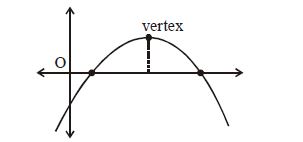
If graph of $y = ax^2 -bx + c$ is following, then sign of $a$, $b$, $c$ are
If $p = i - 2j + 3k$ and $q = 3i + j + 2k,$ then a vector along r which is linear combination of $ p$ and  $ q$  and also perpendicular to  $ q$ is
The equations of the sides $AB$ and $AC$ of a triangle $ABC$ are $(\lambda+1) x +\lambda y =4 \text { and } \lambda x +(1-\lambda) y +\lambda=0$ respectively. Its vertex $A$ is on the $y$-axis and its orthocentre is $(1,2)$. The length of the tangent from the point $C$ to the part of the parabola $y^2=6 x$ in the first quadrant is
$O$ is the origin and $A$ is the point $(3,4)$. If a point $P$ moves so that the line segment $OP$ is always parallel to the line segment $OA$, then the equation to the locus of $P$ is
If $P = \int_0^{3\pi } {f({{\cos }^2}x)dx} \,\,{\rm{and}}\,\,Q = \int_0^\pi {f({{\cos }^2}x)dx} $, then
A tangent $P T$ is drawn to the circle $x^2+y^2=4$ at the point $P(\sqrt{3}, 1)$. A straight line $L$, perpendicular to $P T$ is a tangent to the circle $(x-3)^2+y^2=1$.

$1.$ A common tangent of the two circles is

$(A)$ $x=4$ $(B)$ $y=2$ $(C)$ $x+\sqrt{3} y=4$ $(D)$ $x+2 \sqrt{2} y=6$

$2.$ A possible equation of $L$ is

$(A)$ $x-\sqrt{3} y=1$ $(B)$ $x+\sqrt{3} y=1$ $(C)$ $x-\sqrt{3} y=-1$ $(D)$ $x+\sqrt{3} y=5$

Give the answer question $1$ and $2.$