Question
If $a=2^{\frac{1}{3}}-2^{\frac{-1}{3}}$, prove that $2 a^3+6 a=3$

Answer

$a=2^{\frac{1}{3}}-2^{\frac{1}{3}} $
$ \Rightarrow a=2^{\frac{1}{3}}-\frac{1}{2^{\frac{1}{3}}} $
$ \Rightarrow a^3=\left(2^{\frac{1}{3}}-\frac{1}{2^{\frac{1}{3}}}\right)^3 $
$ =2-\frac{1}{2}-3\left(2^{\frac{1}{3}}-\frac{1}{2^{\frac{1}{3}}}\right) $
$ \Rightarrow a^3=\frac{4-1}{2}-3 a $
$\Rightarrow a^3=\frac{3}{2}-3 a $
$\Rightarrow 2 a^3+6 a=3 .$

Need a full question paper?

Generate a complete, print-ready paper with questions like this in minutes — across 16+ boards, with answer keys.
Start Generating Free

Similar questions

A two$-$digit number is such that the ten’s digit exceeds twice the unit’s digit by $2$ and the number obtained by inter$-$changing the digits is $5$ more than thethesum of the digits. Find the two digit number.
Simplify the following:$2 \log 5+\log 8-\frac{1}{2} \log 4$
If $3 \cos A = 4 \sin A,$ find the value of :$(i) \cos A\ (ii) \ 3 - \cot^2 A + \operatorname{cosec}^2A.$
If the equal sides of an isosceles triangle are produced, prove that the exterior angles so formed are obtuse and equal.
Image
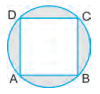
In the given figure, ABCD is a square of side 5 cm inscribed in a circle. Find : (i) the radius of the circle,
(ii) the area of the shaded region. (Take $\pi$ = 3.14 )
[Hint. Radius of the circle $=\left(\frac{1}{2} \times\right.$ Diagonal $)=\left(\frac{1}{2} \times 5 \sqrt{2}\right) cm$.]
If $x=5-2 \sqrt{ 6} $, find $x^2+\frac{1}{x^2}$
Without using tables, evaluate the following: $\sin^230^\circ \sin^245^\circ + \sin^260^\circ \sin^290^\circ$.
In $\triangle ABC,$ Find the sides of the triangle, if:
  1. $AB = ( x - 3 ) \ cm, BC = ( x + 4 ) \ cm$ and $AC = ( x + 6 ) \ cm$
  2. $AB = x \ cm, BC = ( 4x + 4 ) \ cm$ and $AC = ( 4x + 5) \ cm$
In an examination, the ratio of passes to failures was $4 :1.$ Had $30$ less appeared and $20$ less passed, the ratio of passes to failures would have been $5 :1.$ Find the number of students who appeared for the examination.
$AB$ and $CD$ are two equal chords of a circle with center $O$ which intersect each other at a right angle at point $P.$
If $OM \perp AB$ and $ON \perp CD;$
show that $\text{OMPN}$ is a square.