MCQ
If $\lambda _L, \lambda _M$ and $\lambda _N$ are the wave lengths of electron in $L, M, N$ energy levels of $H-$ atom respectively. What is their decreasing order :
  • A
    $\lambda _L > \lambda _M > \lambda _N$
  • $\lambda _L < \lambda _M < \lambda _N$
  • C
    $\lambda _L > \lambda _M < \lambda _N$
  • D
    $\lambda _L < \lambda _M > \lambda _N$
Answer

Correct option: B.
$\lambda _L < \lambda _M < \lambda _N$
b

Need a full question paper?

Generate a complete, print-ready paper with questions like this in minutes — across 16+ boards, with answer keys.

Start Generating Free

Similar questions

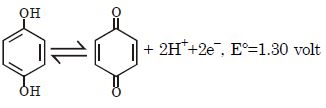
The cell reaction involving quinhydrone electrode is:- ............ $\mathrm{V}$

What will be the electrode potential at $pH = 3$

Ratio of time period of electron in first and third orbit of $H-$ atom would be
Which one of the following complexes will most likely absorb visible light?
(At nos. $Sc = 21 , Ti = 22, V = 23, Zn = 30$)
In which of the following, the reaction proceeds towards completion
Which of the following is non-electrolyte
The correct group of halide ions which can be oxidised by oxygen in acidic medium is
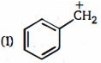
Which of the following options is the correct order of relative stabilities of cations $I, II$ and $III$ as written below (most stable first) ?

$(II)\,\,\,{{H}_{2}}C=CH-C{{H}_{2}}-\overset{+}{\mathop{C}}\,H-C{{H}_{3}}$

$(III)\,\,\,\begin{matrix}
   \,\,\,\,\,C{{H}_{3}}\,  \\
   |\,  \\
   {{H}_{3}}C-C-\overset{+}{\mathop{C}}\,{{H}_{2}}  \\
   |\,  \\
   \,\,\,C{{H}_{3}}  \\
\end{matrix}$

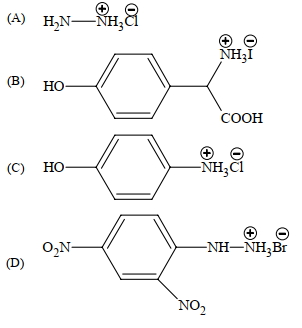
Match the compounds in Column $I$ with their characteristic test $(s)$ reaction $(s)$ given in Column $II$. Indicate your answer by darkening the appropriate bubbles of the $4 \times 4$ matrix gives in the $ORS$.
Column $I$ Column $II$
$Image$ $(p)$ sodium fusion extract of the compound gives Prussian blue colour with $\mathrm{FeSO}_4$
$Image$ $(q)$ gives positive $\mathrm{FeCl}_3$ test
$Image$ $(r)$ gives white precipitate with $\mathrm{AgNO}_3$
$Image$ $(s)$ reacts with aldehydes to form the corresponding hydrazone derivative

Match List-$I$ with List-$II$.

List $-I$ (Process)

List $-II$ (Conditions)
$A$. Isothermal process $I$. No heat exchange
$B$. Isochoric process $II$. Carried out at constant temperature
$C$. Isobaric process $III$. Carried out at constant volume
$D$. Adiabatic process $IV$. Carried out at constant pressure

Choose the correct answer from the options given below:

Which of the following complexes has maximum $CFSE$?