MCQ
If the potential at each point on a conductor is same to each other, then:
  • A
    Electric lines of force may begin or end on the same conductor.
  • B
    No electric lines of force may begin or end on the same conductor.
  • C
    The electric field inside the conductor may be non-zero.
  • D
    None of the above.

Answer

  1. No electric lines of force may begin or end on the same conductor.

Explanation:

Electric field lines explain the orientation of the electric field in the region and it points tangential to the point at which it is drawn. Thus at any point, the tangent to the electric field line matches the direction of the electric field.

The density of the field lines at a point determines the strength of the electric field at that point.

Therefore, if the potential at each point of the conductor is the same, then it means that there are no electric lines that may begin or end on the conductor.

Need a full question paper?

Generate a complete, print-ready paper with questions like this in minutes — across 16+ boards, with answer keys.

Start Generating Free

Similar questions

A point source of electromagnetic radiation has an average power output of 800 W. The maximum value of electric field at a distance 4.0 m from the source is

(a) 64.7 V/m

(b) 57.8 V/m

(c) 56.72 V/m

(d) 54.77 V/m

Which is not true with respect to the cathode rays

(a) A stream of electrons

(b) Charged particles

(c) Move with speed same as that of light

(d) Can be deflected by magnetic fields

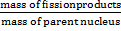
In any fission process the ratio   is

(a) Less than 1

(b) Greater than 1

(c) Equal to 1

(d) Depends on the mass of the parent nucleus

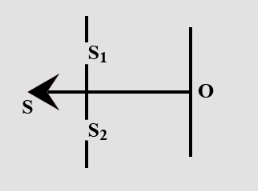
In the set up shown, the two slits S1​ and S2​ are not equidistant from the slit S. The central fringe at O is then:

The valence of the impurity atom that is to be added to germanium crystal so as to make it a N-type semiconductor, is

(a) 6 

(b) 5

(c) 4  

(d) 3

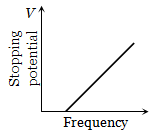
In the graph given below. If the slope is 4.12  V-sec, then value of ‘h’ should be

(a) 6.6  J-sec

(b) 6.6  J-sec

(c) 9.1  J-sec

(d) None of these

An ammeter gives full deflection when a current of 2 amp. flows through it. The resistance of ammeter is 12 ohms.  If the same ammeter is to be used for measuring a maximum current of 5 amp., then the ammeter must be connected with a resistance of

(a) 8 ohms in series

(b) 18 ohms in series

(c) 8 ohms in parallel

(d) 18 ohms in parallel

In which of the following decays the atomic number decreases?
  1. $\alpha-\text{decay}$
  2. $\beta^+-\text{decay}$
  3. $\beta^--\text{decay}$
  4. $\gamma-\text{decay}$
An electric dipole is placed in a uniform electric field. The net electric force on the dipole.
The nature of charge on the object can be detected by: