Question
In a junction diode, the holes are due to
| (a) Protons | (b) Neutrons | (c) Extra electrons | (d) Missing of electrons |
In a junction diode, the holes are due to
| (a) Protons | (b) Neutrons | (c) Extra electrons | (d) Missing of electrons |
(d) Missing of electrons
Generate a complete, print-ready paper with questions like this in minutes — across 16+ boards, with answer keys.
A reaction between a proton and  that produces
  must also liberate
|
(a) |
(b) |
(c) |
(d) |
According to modern astronomers into how many constellations, the whole sky is divided
|
(a) 1011 |
(b) 88 |
(c) 880 |
(d) 5000 |
Work function of a metal is 2.1 eV. Which of the waves of the following wavelengths will be able to emit photoelectrons from its surface
|
(a) 4000 Å, 7500 Å |
(b) 5500 Å, 6000 Å |
(c) 4000 Å, 6000 Å |
(d) None of these |
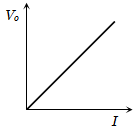
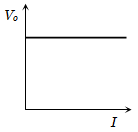
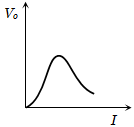
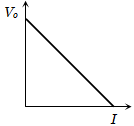
The correct curve between the stopping potential (V) and intensity of incident light (I) is
|
(a)
|
(b)
|
(c)
|
(d)
|
What is the time taken (in seconds) to cross a glass of thickness 4 mm and μ = 3 by light
|
(a) 4 |
(b) 2 |
(c) 16 |
(d) 8 |