Question
In a p-type semiconductor, the acceptor valence band is:

Answer

  1. Close to the valence band of the host crystal.

Need a full question paper?

Generate a complete, print-ready paper with questions like this in minutes — across 16+ boards, with answer keys.
Start Generating Free

Similar questions

In a coil of area $10\ cm^2$ and $10$ turns with a magnetic field directed perpendicular to the plane and is changing at the rate of $10^8$ gauss/second. The resistance of the coil is $20$ ohm. The current in the coil will be
Two circuits have coefficient of mutual induction of 0.09 henry. Average e.m.f. induced in the secondary by a change of current from 0 to 20 ampere in 0.006 second in the primary will be(a) 120 V(b) 80 V(c) 200 V (d) 300 V
       
The intensity of gamma radiation from a given source is $I.$ On passing through  $36\ mm$ of lead, it is reduced to $\frac{1}{8}$ . The thickness of lead which will reduce the intensity to $\frac{1}{2}$  will be
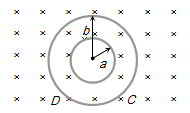
Plane figures made of thin wires of resistance $R = 50$ milli ohm/metre are located in a uniform magnetic field perpendicular into the plane of the figures and which decrease at the rate $dB/dt = 0.1\ m T/s$. Then currents in the inner and outer boundary are. $($The inner radius $a = 10 \ cm$ and outer radius $b = 20 \ cm)$
A ray of light is incidenting normally on a plane mirror. The angle of reflection will be(a) 0°(b) 90°(c) Will not be reflected(d) None of the above
   
   
The Sun receives its radiation energy from :
In ${ }_0^1 n \rightarrow{ }_1^1 H +{ }_{-1}^0 \beta$ symbol ${ }_1^1 H$ represents :
The empirical atom model was given by:
Let Q and W denote the amount of heat given to an ideal gas and the work done by it in an isothermal process.
  1. Q = 0
  2. W = 0
  3. Q ≠ W
  4. Q = W
The potential difference applied to an X-ray tube is increased. As a result, in the emitted radiation:
  1. The intensity increases.
  2. The minimum wavelength increases.
  3. The intensity remains unchanged.
  4. The minimum wavelength decreases.