Question
In an electron gun the control grid is given a negative potential relative to cathode in order to

Answer

(b) You must know the working of an electron gun. In an electron gun the control grid is given a negative potential relative to cathode in order to repel electrons and thus to control the number of electrons passing through it

Need a full question paper?

Generate a complete, print-ready paper with questions like this in minutes — across 16+ boards, with answer keys.
Start Generating Free

Similar questions

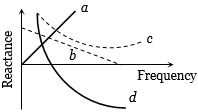
Which of the following plots may represent the reactance of a series $LC$ combination
A double charged lithium atom is equivalent to hydrogen whose atomic number is $3$. The wavelength of required radiation for emitting electron from first to third Bohr orbit in $L{i^{ + + }}$ will be.......$\mathop A\limits^o $ (Ionisation energy of hydrogen atom is $13.6\,eV$)
A star emits light of $5500 Å$ wavelength. Its appears blue to an observer on the earth, it means
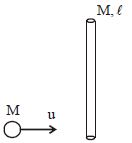
A rod of mass $M$ and length $l$ is at rest on plane horizontal smooth surface. A particle of same mass $M$ strike one end with velocity $u$ perpendicular to rod, elastically. Now just after collision what is the kinetic energy of upper half part of rod.
Which of the following is not the unit of energy
A shell, in flight, explodes into four unequal parts. Which of the following is conserved?
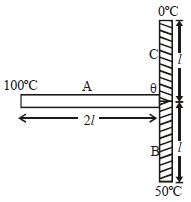
Three rods $A, B$ and $C$ of thermal conductivities $K, 2\,K$ and $4\,K$, cross-sectional  areas $A, 2\,A$ and $2\,A$ and lengths $2l, l$ and $l$ respectively are connected as shown  in the figure. If the ends of the rods are maintained at temperatures $100^o\,C, 50^o\,C$, and $0^o\,C$ respectively, then the temperature $\theta$ of the junction is ......... $^oC$
In the following hexagons, made up of two different material $P$ and $Q,$ current enters and leaves from points $X$ and $Y$ respectively. In which case the magnetic field at its centre is not zero.
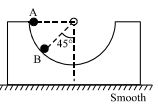
Aball of mass $m$ is released from Ainside $a$ smooth wedge of mass $m$ as shown in the figure. What is the speed of the wedge when the ball reaches point $B$ ?
A circular disc rotating with frequency $f_0 = 1.3\, rev/sec$ comes to a stop in $30\, seconds$. The approximate angular acceleration is ....... $rad/{\sec ^2}$