MCQ
In  $C{H_3}C{H_2}OH\mathop {\xrightarrow{X}}\limits_{{{350}\,^o}C} C{H_2} = C{H_2} + {H_2}O;$   $'X' $ is
  • A
    $NaCl$
  • B
    $CaC{l_2}$
  • C
    ${P_2}{O_5}$
  • $A{l_2}{O_3}$

Answer

Correct option: D.
$A{l_2}{O_3}$
d
$C{H_3}C{H_2}OH\xrightarrow[{{{350}\,^o }C}]{{A{l_2}C{O_3}(X)}}C{H_2} = C{H_2} + {H_2}O$

Need a full question paper?

Generate a complete, print-ready paper with questions like this in minutes — across 16+ boards, with answer keys.

Start Generating Free

Similar questions

Which of the following is most stable carbocation
Spin only magnetic moment of $\left[ MnBr _{6}\right]^{4-}$ is $.....\,B.M.$ (round off to the closest integer)
Aniline on treatment with conc. $HN{O_3} + $ conc. ${H_2}S{O_4}$ mixture yields
Calculate the half life of the first-order reaction

$C_2H_4O(g) \longrightarrow CH_4(g) + CO(g)$ If the initial pressure of $C_2H_4O(g)$ is $80\, mm$ and total pressure at the end of $20\, minutes$ is $120\, mm$ ............ $\min$
The conductivity of a weak acid $HA$ of concentration $0.001\, \mathrm{~mol}\, \mathrm{~L}^{-1}$ is $2.0 \times 10^{-5}\, \mathrm{~S} \,\mathrm{~cm}^{-1} .$ If $\Lambda_{\mathrm{m}}^{\circ}$ $(\mathrm{HA})=190 \,\mathrm{~S} \,\mathrm{~cm}^{2} \mathrm{~mol}^{-1}$, the ionization constant $\left(\mathrm{K}_{\mathrm{a}}\right)$ of $\mathrm{HA}$ is equal to $....\,\times 10^{-6} .$ (Round off to the Nearest Integer)
In $C{H_3}C{H_2}OH$ which bond dissociates heterolytically
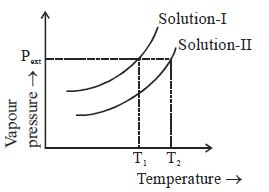
Two different solutions were prepared by dissolving sucrose in water having concentration of $1\,m$ and $2\,m$ respectively. Value of $(T_2-T_1)$ will be ........... $K$.
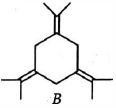
Compound $A$ was treated with a large excess of $CH_3MgBr$. The resulting  product was exposed to $POCl_3$ /pyridine to give compound $B$, as one of  many products

Which of the following compounds can be $A$ ?
The ionic radii $(\mathop A\limits^o )$ of $C^{4-}$ and $O^{2-}$ respectively are $2.60$ and $1.40 .$ The ionic radius of the isoelectronic ion $N^{3-}$ would be........$\mathop A\limits^o $
Reagent used for detection of $Ni^{2+}$ is $A. x$ mol of $A$ reacts with $Ni^{2+}$ and give a complex of $C$ colour. $A, x, C$ are respectively