MCQ
In cyclotron the resonance condition is:
  • The frequency of revolution of charged particle is equal to the frequency of $A.C.$ voltage sources.
  • B
    The frequency of revolution of charged particle is equal to the frequency of applied magnetic field.
  • C
    The frequency of revolution of charged particle is equal to the frequency of rotation of earth.
  • D
    The frequency of revolution of charged particle, frequency of $A.C.$ source and frequency of magnetic field are equal.
Answer

Correct option: A.
The frequency of revolution of charged particle is equal to the frequency of $A.C.$ voltage sources.

Need a full question paper?

Generate a complete, print-ready paper with questions like this in minutes — across 16+ boards, with answer keys.

Start Generating Free

Similar questions

The Lyman series of hydrogen spectrum lies in the region
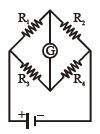
The resistances in $WSB$ circuit shown in the diagram all are different and the current through the galvanometer is zero. If all thermal effects are negligible, the current through the galvanometer will not be zero, when
An alternating voltage of amplitude $40 \mathrm{~V}$ and frequency $4 \mathrm{kHz}$ is applied directly across the capacitor of $12 \mu \mathrm{F}$. The maximum displacement current between the plates of the capacitor is nearly:
The magnifying power of an astronomical telescope in the normal adjustment position is $100$. The distance between the objective and the eye piece is $101 \,cm$. Find the focal  length of the objective lens.....$cm$
The total energy of an electron in an atom in an orbit is $-3.4 \;eV.$ Its kinetic and potential energies are, respectively
Angle of prism is $A$ and its one surface is silvered. Light rays falling at an angle of incidence 2 A on first surface return back through the same path after suffering reflection at second silvered surface. Refractive index of the material of prism is
The critical angle of a medium with respect to air is ${45^o}$. The refractive index of medium is
List-$I$ shows different radioactive decay processes and List-$II$ provides possible emitted particles. Match each entry in List-$I$ with an appropriate entry from List-$II$, and choose the correct option.
List-$I$ List-$II$
($P$) ${ }_{92}^{238} U \rightarrow{ }_{91}^{234} \mathrm{~Pa}$ ($1$) one $\alpha$ particle and one $\beta^{+}$particle
($Q$) ${ }_{82}^{214} \mathrm{~Pb} \rightarrow{ }_{82}^{210} \mathrm{~Pb}$ ($2$) three $\beta^{-}$particles and one $\alpha$ particle
($R$) ${ }_{81}^{210} \mathrm{Tl} \rightarrow{ }_{82}^{206} \mathrm{~Pb}$ ($3$) two $\beta^{-}$particles and one $\alpha$ particle
($S$) ${ }_{91}^{228} \mathrm{~Pa} \rightarrow{ }_{88}^{224} \mathrm{Ra}$ ($4$) one $\alpha$ particle and one $\beta^{-}$particle
  ($5$) one $\alpha$ particle and two $\beta^{+}$particles
It is necessary to coat a glass lens with a non-reflecting layer. If the wavelength of the light in the coating is $\lambda$ , the best choice is a layer of material having an index of refraction between those of glass and air and a thickness of
An example of a perfect diamagnet is a superconductor. This implies that when a superconductor is put in a magnetic field of intensity $B$, the magnetic field $B_s$ inside the superconductor will be such that