MCQ
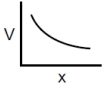
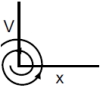
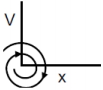
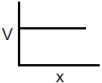
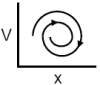
In damped oscillation graph between velocity and position will be
  • A

  • B


  • D

Answer

Correct option: C.

c
In the case of damped oscillation, the amplitude keeps on decreasing that implies the graph for $V$ versus $x$ is,

Need a full question paper?

Generate a complete, print-ready paper with questions like this in minutes — across 16+ boards, with answer keys.

Start Generating Free

Similar questions

Two cylindrical vessels of equal cross-sectional area $16\,cm ^{2}$ contain water upto herghts $100\,cm$ and $150\,cm$ respectively. The vessels are interconnected so that the water levels in them become equal. The work done by the force of gravity during the process, is $......J$ [Take density of water $=10^{3}\,kg / m ^{3}$ and $g =10\,ms ^{-2}$ ]
When the number of turns and the length of the solenoid are doubled keeping the area of cross-section same, the inductance
Kinetic energy of emitted cathode rays is dependent on
The position of a particle related to time is given by $x =\left(5 t ^2-4 t +5\right) m$. The magnitude of velocity of the particle at $t=2\,s$ will be $...........ms^{-1}$
A bar of mas $M=1.00 \mathrm{~kg}$ and length $L=0.20 \mathrm{~m}$ is lying on a horizontal frictionless surface. One end of the bar is pivoted at a point about which it is free to rotate. A small mass $m=0.10 \mathrm{~kg}$ is moving on the same horizontal surface with $5.00 \mathrm{~m} \mathrm{~s}^{-1}$ speed on a path perpendicular to the bar. It hits the bar at a distance $L / 2$ from the pivoted end and returns back on the same path with speed $v$. After this elastic collision, the bar rotates with an angular velocity $\omega$. Which of the following statement is correct?
A cricket ball of mass $0.15\, kg$ is thrown vertically up by a bowling machine so that it rises to a maximum height of $20 \;m$ after leaving the machine. If the part pushing the ball applies a constant force $F$ on the ball and moves horizontally a distance of $0.2\, m$ while launching the ball, the value of $F($ in $N)$ is 

$\left(g=10\, m s^{-2}\right)$

Assertion : Free electrons always keep on moving in a conductor even then no magnetic force act on them in magnetic field unless a current is passed through it.

Reason : The average velocity of free electron is zero.

The image of an object, formed by a plano-convex lens at a distance of $8 \ m$ behind the lens, is real and is one-third the size of the object. The wavelength of light inside the lens is $\frac{2}{3}$ times the wavelength in free space. The radius of the curved surface of the lens is :
A galvanometer has $30$ divisions and a sensitivity $16\,\mu A/{\rm{div}}{\rm{.}}$ It can be converted into a voltmeter to read $3\, V$ by connecting
Both the nucleus and the atom of some element are in their respective first excited states. They get de-excited by emitting photons of wavelengths $\lambda _N,\,\lambda _A$  respectively. The ratio $\frac{{{\lambda _N}}}{{{\lambda _A}}}$  is closest to