Question

In diode, when there is saturation current, the plate resistance (  is

(a) Zero

(b) Infinite

(c) Some finite quantity

(d) Data is insufficient

Answer

(b) Infinite

Need a full question paper?

Generate a complete, print-ready paper with questions like this in minutes — across 16+ boards, with answer keys.

Start Generating Free

Similar questions

Consider a system of two identical particles. One of the particles is at rest and the other has an acceleration $\overrightarrow{\text{a}}.$ The centre of mass has an acceleration:

  1. Zero

  2. $\frac{1}{2}\overrightarrow{\text{a}}$

  3. $\overrightarrow{\text{a}}$

  4. $2\overrightarrow{\text{a}}$

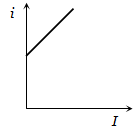
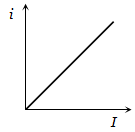
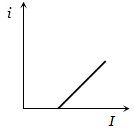
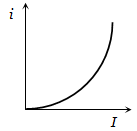
The graph between intensity of light falling on a metallic plate (I) with the current (i) generated is

(a)

(b)

(c)

(d)

Photoelectric emission is observed from a metallic surface for frequencies  and  of the incident light rays (. If the maximum values of kinetic energy of the photoelectrons emitted in the two cases are in the ratio of 1 : k, then the threshold frequency of the metallic surface is

(a)  

(b)

(c)

(d)

The de-Broglie wavelength of a particle moving with a velocity 2.25 × 10⁸ m/s is equal to the wavelength of photon. The ratio of kinetic energy of the particle to the energy of the photon is (velocity of light is 3 × 10⁸ m/s)

(a) 1/8

(b) 3/8

(c) 5/8

(d) 7/8

Two sources are called coherent if they produce waves:
  1. Of equal wavelength.
  2. Of equal velocity.
  3. Having same shape of wavefront.
  4. Having a constant phase difference.

A uniform wire of 16 Ω  is made into the form of a square. Two opposite corners of the square are connected by a wire of resistance 16 Ω. The effective resistance between the other two opposite corners is

(a) 32 Ω  

(b) 20 Ω

(c) 8 Ω

(d) 4 Ω

The specific resistance of a rod of copper as compared to that of thin wire of copper is:

The amplification factor of a triode is 50. If the grid potential is decreased by 0.20 V, what increase in plate potential will keep the plate current unchanged

(a) 5 V

(b) 10 V

(c) 0.2 V

(d) 50 V

Which of the following cannot travel in vacuum?

In  nucleus, there are

(a) 138 protons and 88 neutrons

(b) 138 neutrons and 88 protons

(c) 226 protons and 88 electrons

(d) 226 neutrons and 138 electrons