MCQ
In electrolytes, the mobile charges are:
- APositive ions.
- BNegative ions.
- CBoth a and b.
- DNone.
Generate a complete, print-ready paper with questions like this in minutes — across 16+ boards, with answer keys.
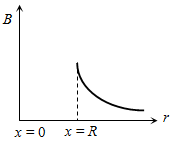
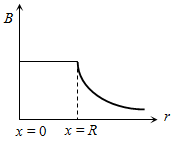
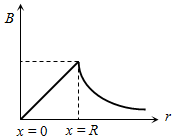
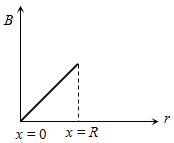
A long thin hollow metallic cylinder of radius 'R' has a current i ampere. The magnetic induction 'B'-away from the axis at a distance r from the axis varies as shown in
|
(a)
|
(b)
|
(c)
|
(d)
|
When ultraviolet rays are incident on metal plate, then photoelectric effect does not occurs. It occurs by the incidence of
|
(a) X-rays |
(b) Radio wave |
(c) Infrared rays |
(d) Green house effect |
The difference in the variation of resistance with temperature in a metal and a semiconductor arises essentially due to the difference in the
|
(a) Variation of scattering mechanism with temperature |
|
(b) Crystal structure |
|
(c) Variation of the number of charge carriers with temperature |
|
(d) Type of bon |
In the given figure the capacitors  have a capacitance 4mF each if the capacitor
  has a capacitance 10mF, then effective capacitance between A and B will be

|
(a) 2mF |
(b) 4mF |
(c) 6mF |
(d) 8mF |
In the circuit shown here, the readings of the ammeter and voltmeter are

|
(a) 6 A, 60 V |
(b) 0.6 A, 6 V |
(c) 6/11 A, 60/11 V |
(d) 11/6 A, 11/60 V |
$\text{v}=\frac{\text{v}_1+\text{v}_2}{2}$
$\text{v}=\sqrt{\text{v}_1\text{v}_2}$
$\frac{2}{\text{v}}=\frac{1}{\text{v}_1}+\frac{1}{\text{v}_2}$
$\frac{1}{\text{v}}=\frac{1}{\text{v}_1}+\frac{1}{\text{v}_2}$