Question
In hydrogen atom which quantity is integral multiple of 
|
(a) Angular momentum |
(b) Angular velocity |
|
(c) Angular acceleration |
(d) Momentum |
In hydrogen atom which quantity is integral multiple of
|
(a) Angular momentum |
(b) Angular velocity |
|
(c) Angular acceleration |
(d) Momentum |
(a) Angular momentum
Generate a complete, print-ready paper with questions like this in minutes — across 16+ boards, with answer keys.
The refractive index of a piece of transparent quartz is the greatest for
|
(a) Red light |
(b) Violet light |
(c) Green light |
(d) Yellow light |
In the diagram a graph between the intensity of X-rays emitted by a molybdenum target and the wavelength is shown, when electrons of 30 keV are incident on the target. In the graph one peak is of  line and the other peak is of
  line
line
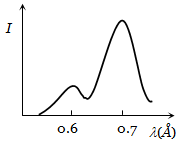
|
(a) First peak is of |
|
(b) Highest peak is of Ka line at 0.7 Å |
|
(c) If the energy of incident particles is increased, then the peaks will shift towards left |
|
(d) If the energy of incident particles is increased, then the peaks will shift towards right |
Due to the flow of current in a circular loop of radius R, the magnetic induction produced at the centre of the loop is B. The magnetic moment of the loop is (
|
(a) |
(b) |
(c) |
(d) |
A cell of negligible resistance and e.m.f. 2 volts is connected to series combination of 2, 3 and 5 ohm. The potential difference in volts between the terminals of 3 ohm resistance will be
|
(a) 0.6 |
(b) 2/3 |
(c) 3 |
(d) 6 |
Assertion : The colour of the green flower seen through red glass appears to be dark.
Reason : Red glass transmits only red light.
|
(a) If both assertion and reason are true and the reason is the correct explanation of the assertion. |
|
(b) If both assertion and reason are true but reason is not the correct explanation of the assertion. |
|
(c) If assertion is true but reason is false. |
|
(d) If the assertion and reason both are false. |


