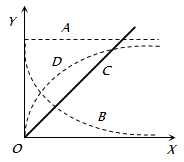
- AValence band is partially filled with electrons.
- BConduction band is partially filled with electrons.
- CConduction band is filled with electrons and valence band is empty.
- DConduction band is empty and valence band is filled with electrons.
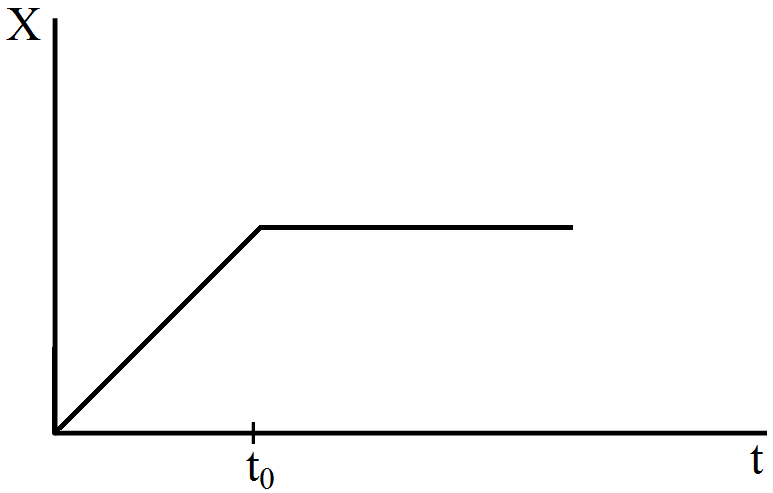
Explanation:
Insulators are the materials which do not conduct electricity. All the electrons are filled in valance band whereas the conduction band is empty. Moreover, the energy band gap in insulators is very large, thus electrons cannot jump from valence band to conduction band.
Generate a complete, print-ready paper with questions like this in minutes — across 16+ boards, with answer keys.
The refractive index of a piece of transparent quartz is the greatest for
|
(a) Red light |
(b) Violet light |
(c) Green light |
(d) Yellow light |
According to Bohr's model, the radius of the second orbit of helium atom is
|
(a) 0.53 Å |
(b) 1.06 Å |
(c) 2.12 Å |
(d) 0.265 Å |
Assertion : The mass of b-particles when they are emitted is higher than the mass of electrons obtained by other means.
Reason : b-particle and electron, both are similar particles.
|
(a) If both assertion and reason are true and the reason is the correct explanation of the assertion. |
|
(b) If both assertion and reason are true but reason is not the correct explanation of the assertion. |
|
(c) If assertion is true but reason is false. |
|
(d) If the assertion and reason both are false. |

The heat developed in an electric wire of resistance R by a current I for a time t is
|
(a) |
(b) |
(c) |
(d) |
White light is passed through a prism whose angle is 5°. If the refractive indices for rays of red and blue colour are respectively 1.64 and 1.66, the angle of deviation between the two colours will be
|
(a) 0.1 degree |
(b) 0.2 degree |
(c) 0.3 degree |
(d) 0.4 degree |
In Fig. X represents time and Y represent activity of a radioactive sample. Then the activity of sample, varies with time according to the curve

|
(a) A |
(b) B |
(c) C |
(d) D |
A radioactive sample at any instant has its disintegration rate 5000 disintegration per minute. After 5 minutes, the rate is 1250 disintegrations per minute. Then, the decay constant (per minute) is
|
(a) 0.8 In 2 |
(b) 0.4 In 2 |
(c) 0.2 In 2 |
(d) 0.1 In 2 |