MCQ
In SI system the fundamental units are
  • A
    meter, kilogram, second, ampere, Kelvin, mole and watt
  • B
    meter, Newton, second, ampere, Kelvin, mole and candela
  • C
    meter, kilogram, second, coulomb, Kelvin, mole, candela and horse power
  • D
    meter, kilogram, second, ampere, Kelvin, mole and candela

Need a full question paper?

Generate a complete, print-ready paper with questions like this in minutes — across 16+ boards, with answer keys.

Start Generating Free

Similar questions

When shearing force is applied on a body, then the elastic potential energy is stored in it. On removing the force, this energy
A pendulum clock keeps correct time at $0°C$. Its mean coefficient of linear expansions is $\alpha /^\circ C$, then the loss in seconds per day by the clock if the temperature rises by $t°C$ is
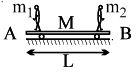
Two persons of mass $m_1$ and $m_2$ are standing at the two ends $A$ and $B $ respectively, of $a$ trolley of mass $M$ as shown. When only the person standing at $B$ jumps from the trolley towards right while the person at $A$ keeps standing, then
A very broad elevator is going up vertically with a constant acceleration of $2\,m / s ^2$. At the instant when its velocity is $4\,m / s$ a ball is projected from the floor of the lift with a speed of $4\,m / s$ relative to the floor at an elevation of $30^{\circ}$. The time taken by the ball to return the floor is $..............\,s$ $\left(g=10\,m / s ^2\right)$
A wave on a string is travelling and the displacement of particles on it is given by $x = A\, sin\, (2t -0.1\, x)$. Then the wavelength of the wave is
$Y $ component of velocity is $20$ and $X$ component of velocity is $10$. The direction of motion of the body with the horizontal at this instant is
$Assertion :$ In $SHM$, acceleration is always directed towards the mean position.
$Reason :$ In $SHM$, the body has to stop momentary at the extreme position and move back to mean position.
If $v$ is the speed of sound in air then the shortest length of the closed pipe which resonates to a frequency $n$
An engine pumps water continuously through  a hose. Water leaves the hose with a velocity $v$ and $m$ is the mass per unit length of the water jet. What is the rate at which kinetic energy is imparted to water $?$
A body starts from rest from a point distance $R_0$ from the centre of the earth. The velocity acquired by the body when it reaches the surface of the earth will be ($R$ represents radius of the earth).