MCQ
In $\ce{TeCl_4},$ the central atom tellurium involves:
  • A
    $sp^3$ hybridisation
  • $\ce{sp^3d}$ hybridisation
  • C
    $\ce{dsp^2}$ hybridisation
  • D
    $\ce{sp^3d^2}$ hybridisation

Answer

Correct option: B.
$\ce{sp^3d}$ hybridisation
Number of hybrid orbitals $=\frac{1}{2}​ ($no. of electrons in valence shell of atom $+$ no. of monovalent atoms $-$ charge no cation $+$ charge on the anion$.)$
Number of hybride orbitals $=\frac{1}{2}(6+4+0+0) = 5$​
Hence$, \ce{TeCl_4}$​ shows $\ce{sp^3d}$ hybridisation.

Need a full question paper?

Generate a complete, print-ready paper with questions like this in minutes — across 16+ boards, with answer keys.
Start Generating Free

Similar questions

$\begin{array}{*{20}{c}}
  {\begin{array}{*{20}{c}}
  {CH = O\,\,\,\,\,\,\,\,\,\,} \\ 
  {|\,\,\,\,\,\,\,\,\,\,\,\,\,\,\,\,\,\,\,\,\,\,\,\,\,} 
\end{array}} \\ 
  {{{(CH - OH)}_4}} \\ 
  {\,\,\,|\,\,\,\,\,\,\,\,\,\,\,\,\,\,\,\,\,\,\,\,\,\,\,\,\,\,} \\ 
  {C{H_2} - OH} 
\end{array}$ $\xrightarrow{{B{r_2}/{H_2}O}}P$ ; $P$ is
The freezing point depression constant for water is $-\,1.86\,^o \,C\, m^{-1}.$ If $5.00 \,g \,Na_2SO_4$ is dissolved in $45.0\, g\, H_2O,$ the freezing point is changed by $-\,3.82\,^o C.$ Calculate the van't Hofffactor for $Na_2SO_4 .$
Which of the following alkene on reaction with dil. $H_2SO_4$ does not produce :
The end product of protein digestion is
The three important oxidation states of phosphorus are
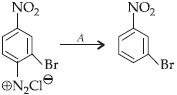
In the reaction $A$ is
A mixture of benzene and toluene forms
In acidic medium $Mn{{\overset{\Theta }{\mathop{O}}\,}_{4}}$ is an oxidising agent $Mn{{\overset{\Theta }{\mathop{O}}\,}_{4}}+8\overset{\oplus }{\mathop{H}}\,+5{{e}^{-}}\to M{{n}^{+2}}+4{{H}_{2}}O$ 

If $\mathop H\limits^ \oplus  $ ion concentration is doubled, electrode potential of the half cell will

$4\,g$  of copper was dissolved in concentrated nitric acid. The copper nitrate solution on strong heating gave $5\,g$ of its oxide. The equivalent weight of copper is
Copper sulphate solution is electrolysed between two platinum electrodes. A current is passed until $1.6 \ g$ of oxygen is liberated at anode. The amount of copper deposited at the cathode during the same period is .............. $\mathrm{g}$ [At. mass of $Cu = 6 3. 6$]