Question
In the above question, potential difference across the 40Ω resistance will be
|
(a) Zero |
(b) 80 V |
(c) 40 V |
(d) 120 V |
In the above question, potential difference across the 40Ω resistance will be
|
(a) Zero |
(b) 80 V |
(c) 40 V |
(d) 120 V |
(a) Zero
Generate a complete, print-ready paper with questions like this in minutes — across 16+ boards, with answer keys.
If the ammeter in the given circuit reads 2 A, the resistance R is

|
(a) 1 ohm |
(b) 2 ohm |
(c) 3 ohm |
(d) 4 ohm |
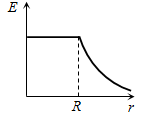
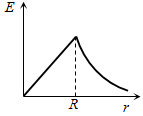
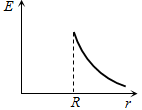
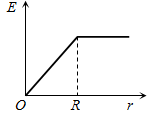
The electric field due to a uniformly charged sphere of radius R as a function of the distance from its centre is represented graphically by
|
(a)
|
(b)
|
(c)
|
(d)
|
The electric intensity due to an infinite cylinder of radius R and having charge q per unit length at a distance r(r > R) from its axis is
|
(a) Directly proportional to |
(b) Directly proportional to |
|
(c) Inversely proportional to r |
(d) Inversely proportional to |
If  and
and  are respectively the filament resistances of a 200 watt bulb and 100 watt bulb designed to operate on the same voltage, then
|
(a) |
(b) |
|
(c) |
(d) |
The wavelength of the first line of Balmer series is 6563  . The Rydberg constant for hydrogen is about
|
(a) 1.09 |
(b) 1.09 |
(c) 1.09 |
(d) 1.09 |
The number of electrons to be put on a spherical conductor of radius 0.1m to produce an electric field of 0.036 N/C just above its surface is
|
(a) 2.7 |
(b) 2.6 |
(c) 2.5 |
(d) 2.4 |
A short magnet oscillates with a time period 0.1 s at a place where horizontal magnetic field is 24μT. A downward current of 18 A is established in a vertical wire 20 cm east of the magnet. The new time period of oscillator
|
(a) 0.1 s |
(b) 0.089 s |
(c) 0.076 s |
(d) 0.057 s |
In photoelectric effect, the K.E. of electrons emitted from the metal surface depends upon
|
(a) Intensity of light |
(b) Frequency of incident light |
|
(c) Velocity of incident light |
(d) Both intensity and velocity of light |