MCQ
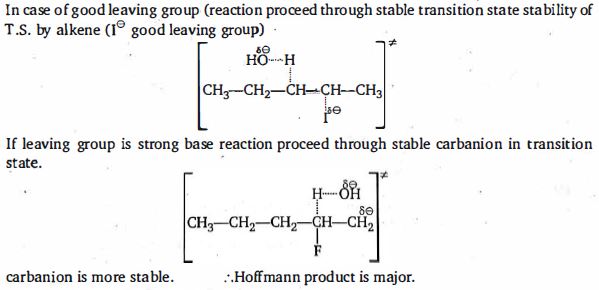
In the above reaction, maximum Saytzeff product will obtained when

- ✓$X = -I$
- B$X = -Cl$
- C$X = -Br$
- DNone of these
Generate a complete, print-ready paper with questions like this in minutes — across 16+ boards, with answer keys.
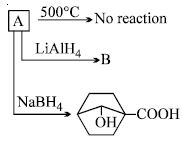
$R - \mathop {\mathop {C\,N{H_2} \to RC{H_2}N{H_2}}\limits^{||\,\,\,\,\,\,\,\,\,\,\,\,\,\,\,\,\,\,\,\,\,\,\,\,\,\,\,\,\,\,\,\,\,\,\,\,\,\,\,\,\,\,\,\,\,\,\,\,\,\,\,} }\limits^{O\,\,\,\,\,\,\,\,\,\,\,\,\,\,\,\,\,\,\,\,\,\,\,\,\,\,\,\,\,\,\,\,\,\,\,\,\,\,\,\,\,\,\,\,\,\,\,\,\,} $
$(A)$ $T _1= T _2$ $(B)$ $T _3> T _1$
$(C)$ $W _{\text {isothermal }} > W _{\text {adiabatic }}$ $(D)$ $\Delta U_{\text {isothermal }}>\Delta U_{\text {adiabatic }}$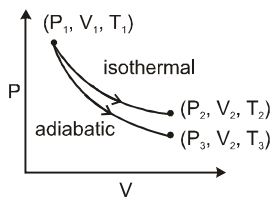
(Nearest integer)
Given, molar mass of $KCl$ is $74.5 g mol ^{-1}$