MCQ
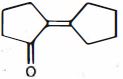
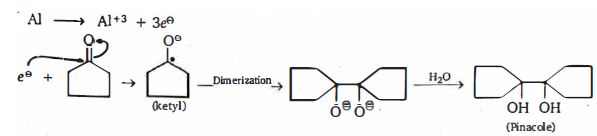
In the reaction, the product $(X)$ is

- A
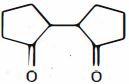
- ✓
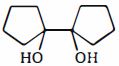
- C
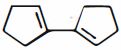
- D
Generate a complete, print-ready paper with questions like this in minutes — across 16+ boards, with answer keys.
Statement $I$: Aqueous solution of $K _2 Cr _2 O$, is preferred as a primary standard in volumetric analysis over $Na _2 Cr _2 O$, aqueous solution
Statement $II:$ $K _2 Cr _2 O$, has a higher solubility in water than $Na _2 Cr _2 O _7$
In the light of the above statements, choose the correct answer from the options given below:
$\mathrm{CH}_{3} \mathrm{CH}_{2} \mathrm{CH}_{2} \mathrm{Br}+\mathrm{Z}^{-}$$\xrightarrow[{{\text{Sublimation}}}]{{{k_s}}} \mathrm{CH}_{3} \mathrm{CH}_{2} \mathrm{CH}_{2} \mathrm{Z}+\mathrm{Br}^{-}$
$\mathrm{CH}_{3} \mathrm{CH}_{2} \mathrm{CH}_{2} \mathrm{Br}+\mathrm{Z}^{-}$$\xrightarrow[{{\text{elimination}}}]{{{k_e}}}\mathrm{CH}_{3} \mathrm{CH}= \mathrm{CH}_{2} +\mathrm{HZ}+\mathrm{Br}^{-}$
where
$\mathrm{Z}^{-}=\mathrm{CH}_{3} \mathrm{CH}_{2} \mathrm{O}^{-}(\mathrm{A})$ or $\begin{array}{*{20}{c}}
{\,C{H_3}} \\
{|\,\,\,\,\,} \\
{C{H_3} - C - {O^ - }(B)} \\
{|\,\,\,\,} \\
{\,\,C{H_3}}
\end{array}$
$\mathrm{k}_{\mathrm{s}}$ and $\mathrm{k}_{\mathrm{e}},$ are $,$ respectively, the rate constants for the substitution and elimination, and $\mu=\frac{\mathrm{k}_{\mathrm{s}}}{\mathrm{k}_{\mathrm{e}}},$ the correct options is
$(A)$ A secondary alcohol on oxidation gives a ketone
$(B)$ Ethanol reacts with conc. ${H_2}S{O_4}$ at ${180\,^o}C$ to yield ethylene
$(C)$ Methanol reacts with iodine and sodium hydroxide to give a yellow precipitate of iodoform
$(D)$ Hydrogen gas is liberated when sodium is added to alcohol. Select the correct statements from the above set:
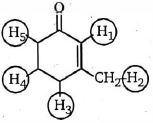
Statement $I :$ The limiting molar conductivity of $\mathrm{KCl}$ (strong electrolyte) is higher compared to that of $\mathrm{CH}_{3} \mathrm{COOH}$ (weak electrolyte).
Statement $II :$ Molar conductivity decreases with decrease in concentration of electrolyte.
In the light of the above statements, choose the most appropriate answer from the options given below: