MCQ
Incorrect stability order comparison for resonating structures are
- A
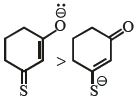
- B
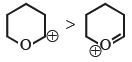
- C
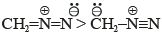
- ✓$A$ and $B$ both
Generate a complete, print-ready paper with questions like this in minutes — across 16+ boards, with answer keys.
${A_{2(g)}}$ $+$ $2{B_{\left( g \right)}}$ $\rightleftharpoons$ ${C_{(g)}}$$+ Q.kJ.$ would be high at
| $List-I$ | $List-II$ |
| ($P$) $XeF _2$ | ($1$) Trigonal bipyramidal and two lone pair of electrons |
| ($Q$) $XeF _4$ | ($2$) Tetrahedral and one lone pair of electrons |
| ($R$) $XeO _3$ | ($3$) Octahedral and two lone pair of electrons |
| ($S$) $XeO _3 F _2$ | ($4$) Trigonal bipyramidal and no lone pair of electrons |
| ($5$) Trigonal bipyramidal and three lone pair of electrons |
$(A)$ The stronger the temperature dependence of the rate constant, the higher is the activation energy.
$(B)$ If a reaction has zero activation energy, its rate is independent of temperature.
$(C)$ The stronger the temperature dependence of the rate constant, the smaller is the activation energy.
$(D)$ If there is no correlation between the temperature and the rate constant then it means that the reaction has negative activation energy.